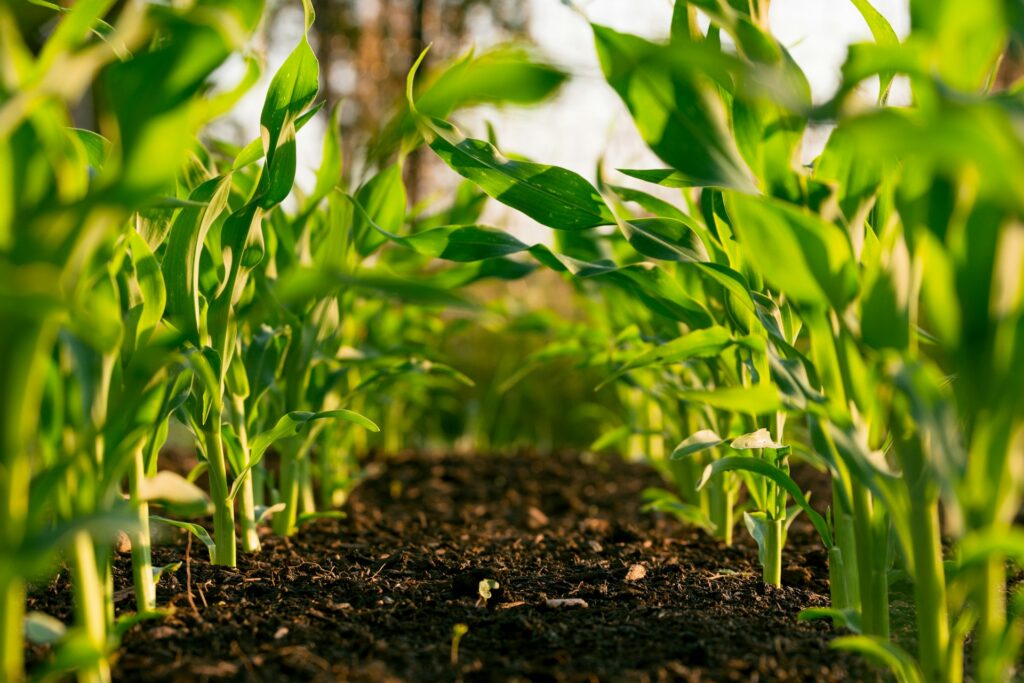
Innovative data-driven ERP technologies for agriculture for a sustainable future.
“Feeding a growing world population is possible, but it depends on how food is produced — and at what environmental, social, and economic cost.”
Agriculture has always depended on weather, soil, water, skills, and hard work. Today, farmers must also deal with rising costs, labor shortages, market pressure, changing regulations, and more unpredictable weather.
Droughts, heatwaves, heavy rain, hail, late frost, and changing growing seasons can affect yields and make planning much more difficult. Farmers cannot simply rely on the weather patterns their parents or grandparents knew.
At the same time, the world will need a reliable food supply for a population expected to be close to 10 billion people by 2050. The Food and Agriculture Organization of the United Nations explains that food security depends not only on producing enough food, but also on producing it in a way that protects environmental health, economic viability, and future generations. FAO on sustainable food and agriculture
The future of farming is not about choosing between productivity and sustainability. It is about using better information to achieve both.
Climate Change Makes Farming Less Predictable
Farming has always involved risk, but climate change makes that risk harder to manage.
A dry period can reduce crop growth and increase irrigation needs. Heavy rain can damage fields, delay harvests, create erosion, or increase disease pressure. Heat can affect crops, animals, workers, and water availability. A sudden hailstorm can damage an entire field in minutes.
These events can have a direct effect on revenue, costs, stock planning, labor needs, and supply contracts.
This is why modern agriculture needs more than experience and intuition. Experience remains extremely valuable, but it must be supported by current data, field observation, weather information, and structured planning.
A company that understands its fields, crops, input costs, yields, and risks can react earlier and make better choices.
Sustainable Farming Is Also Better Business Management
Sustainability is sometimes discussed as if it is separate from business performance. In reality, good environmental management can also support stronger operations.
Using too much fertilizer, water, fuel, packaging, or feed costs money. Poor soil health can reduce future productivity. Over-ordering inputs ties up cash. Uncontrolled waste reduces margins. A lack of traceability can make it difficult to prove quality or respond to customer requirements.
Sustainable farming means using resources carefully while protecting the ability to produce in the future.
Practices such as crop rotation, cover crops, reduced soil disturbance, improved water management, agroforestry, and better nutrient planning can help farmers build resilience. The right approach depends on the farm, region, soil, crop type, water availability, and market conditions.
Technology cannot replace good agricultural knowledge. But it can help farmers apply that knowledge more accurately.
Precision Agriculture Uses Inputs More Carefully
Precision agriculture means using data and technology to manage fields in a more targeted way.
Instead of treating every part of a field exactly the same, a farmer can use soil information, satellite images, machinery data, weather stations, sensors, and field observations to understand where conditions are different.
One area may need more water. Another may have lower soil nutrients. A third may show signs of crop stress or disease. With better information, farmers can make more precise decisions about irrigation, fertilizer, seed, crop protection, and field work.
The aim is not to use technology for its own sake. The aim is to apply the right input, in the right place, at the right time.
The FAO describes precision agriculture as an approach that can optimize growing conditions such as water, nutrients, light, and climate for specific crops. FAO on precision agriculture
For the farmer, this can mean less waste, better cost control, and more reliable crop management. For the environment, it can mean lower unnecessary input use and more careful resource use.
Farm Data Must Become Useful Information
Modern farms can produce a large amount of data.
A tractor may record fuel use, routes, speed, machine hours, and field coverage. A weather station may record rainfall, temperature, wind, and humidity. Drones and satellite images can show crop growth patterns. Soil sensors can help monitor moisture and field conditions. Sales and purchasing records show the financial side of the operation.
But data alone does not improve a farm.
The real value comes when this information is brought together and turned into decisions. A farmer or agricultural manager needs answers to practical questions. Which field has the lowest yield? Which crop uses the most inputs? Which supplier is becoming more expensive? Where is water use increasing? Which machines are costing too much to maintain? Which crop is creating the best margin after all costs are included?
This is where an ERP system can support agricultural businesses.
SIX ERP can connect purchasing, warehouse stock, machinery records, production activities, customer orders, finance, employee time, documents, and Business Intelligence reporting. It helps turn daily farm activity into reliable management information.
Drones and Satellite Images Improve Field Visibility
Drones and satellite technology can give farmers a view of their fields that is difficult to achieve from the ground alone.
They can help identify areas where crops are growing unevenly, where water stress may be developing, where pests or disease may be present, or where erosion is becoming a concern. This allows farmers to inspect the right area first instead of treating every hectare in the same way.
Satellite and geospatial technology are becoming increasingly important for food systems. The FAO has highlighted the potential of modern satellite data to improve food security and support agricultural decision-making. FAO on geospatial technology for food security
These tools should support field inspections, not replace them completely. A map may show a potential issue, but an experienced person still needs to understand the crop, soil, weather, and local conditions before deciding what action to take.
Smart Machines Can Improve Efficiency
Modern agricultural machinery can collect useful data while performing everyday work.
Tractors, harvesters, sprayers, irrigation equipment, and other machines may record operating hours, fuel use, routes, working speed, location, and machine performance. Some systems can also support more automated or assisted operation.
Autonomous and semi-autonomous machines may help reduce repetitive work and improve precision in suitable conditions. However, they are not a simple replacement for skilled workers. They require reliable equipment, clear safety procedures, training, technical support, and good operational planning.
For many farms, the first useful step is not full automation. It is better maintenance planning, machine-hour tracking, fuel control, field activity records, and a clearer understanding of machine costs.
When this information is connected to the ERP, management can see the full picture: not only what the machine did, but what it cost and how it affected production results.
AI Can Help Spot Patterns Earlier
Artificial Intelligence, or AI, is beginning to support agriculture in areas such as image analysis, crop monitoring, forecasting, maintenance planning, and pattern recognition.
For example, computer vision may help identify possible crop stress, disease signs, or pest damage in images. Forecasting tools may help estimate demand, irrigation needs, or likely yield trends. AI can also help analyze large amounts of farm data that would take too long to review manually.
AI should be treated as a support tool, not as a final decision-maker.
The best farming decisions still combine technology with local knowledge, agronomic expertise, weather conditions, soil understanding, and experience. AI can point to a possible issue. A qualified person should decide what action is safe, legal, practical, and financially sensible.
The FAO notes that AI has the potential to support agrifood systems through better analysis, advice, and access to knowledge, but its value depends on responsible use and reliable data. FAO on AI in agriculture
Traceability Is Becoming More Important
Customers, retailers, regulators, and business partners increasingly want to know where food comes from and how it was produced.
Traceability means being able to follow a product through its journey. This can include the field where it was grown, the batch of seed or input used, the harvest date, storage conditions, processing steps, transport details, and final customer delivery.
For food producers, traceability supports quality control, food safety, recall management, certification, export requirements, and customer trust.
A connected ERP system can help agricultural businesses record this information in a structured way. It can link products, batches, suppliers, warehouse movements, production activities, quality documents, and sales records.
This makes it easier to answer an important question: What happened, when did it happen, and where did this product go?
The Goal Is Resilience, Not Only Higher Yield
Higher yields are important, but they are not the only measure of success.
A farm can produce more and still face problems if costs rise too quickly, soil quality declines, water use becomes unsustainable, or the business cannot manage market changes.
A resilient agricultural business is able to respond to challenges. It understands its costs. It manages stock. It maintains equipment. It plans purchasing. It tracks production. It keeps clear records. It learns from each season.
Climate-smart agriculture aims to support food security, stronger livelihoods, and adaptation to climate risks while reducing unnecessary environmental pressure. FAO on climate-smart agriculture
The technology is useful because it helps farmers make more informed choices. It does not remove uncertainty, but it makes the business better prepared to deal with it.
Smart Agriculture With SIX ERP
SIX ERP supports agricultural businesses by bringing important operational information into one connected system.
Purchasing teams can manage suppliers, prices, orders, and input costs. Warehouse teams can control stock, locations, batches, and movements. Production teams can record field or farm activities, material use, outputs, and waste. Finance can track costs, invoices, margins, and payments. Management can use Business Intelligence dashboards to understand performance across crops, fields, products, customers, or business units.
The system can also support connections to external data sources, field tools, machine systems, sensors, logistics platforms, and reporting tools where these integrations create practical value.
The future of agriculture will depend on strong farming knowledge, responsible use of resources, and better decisions supported by trustworthy data. SIX ERP helps bring these parts together — so agricultural businesses can work with more control today and greater resilience for tomorrow.