Transforming a Potato Chips Factory into a Smart, Scalable Production Facility with SIX ERP
“Smart manufacturing is not only about machines doing the work. It is about creating systems that can measure, adapt, and improve with every challenge.”
Manufacturing is changing.
For years, the main goal was efficiency: produce more units, reduce downtime, and keep costs under control. Those goals still matter. But modern manufacturing needs more than fixed processes and manual reactions.
It needs visibility. It needs traceability. It needs reliable data from the shop floor. And it needs the ability to react when reality does not follow the plan.
At SIX ERP, we do not approach manufacturing ERP as a simple software installation. We build connected systems that link planning, materials, machines, people, warehouse operations, quality control, finance, and business reporting.
The goal is not only to automate production. The goal is to make production easier to understand, control, and improve.
A Smart Factory Begins Before Production Starts
One of the most demanding manufacturing projects is the setup of a new food-production facility, such as a potato chips factory.
At first glance, potato chips may sound simple: potatoes enter, chips leave. In reality, the production process is highly sensitive.
The quality of raw potatoes can change. Moisture content can vary. Oil temperature affects the frying result. Slicing thickness influences cooking time. Seasoning must be applied consistently. Packaging must protect the product and meet legal, customer, and shelf-life requirements.
A small change in one part of the process can affect product quality, waste, energy use, production speed, and final cost.
This is why a smart factory should not begin only when machines are installed. It should begin with a clear digital model of the process.
Food Manufacturing Has Its Own Complexity
Food production is different from many other types of manufacturing.
In technical manufacturing, a component may have highly predictable dimensions and a long storage life. In food production, raw materials can be perishable and naturally variable. Quality must be checked constantly. Hygiene, allergen control, batch traceability, and food-safety documentation are essential.
In a potato chips factory, the business must control the journey from raw potato intake to finished product dispatch.
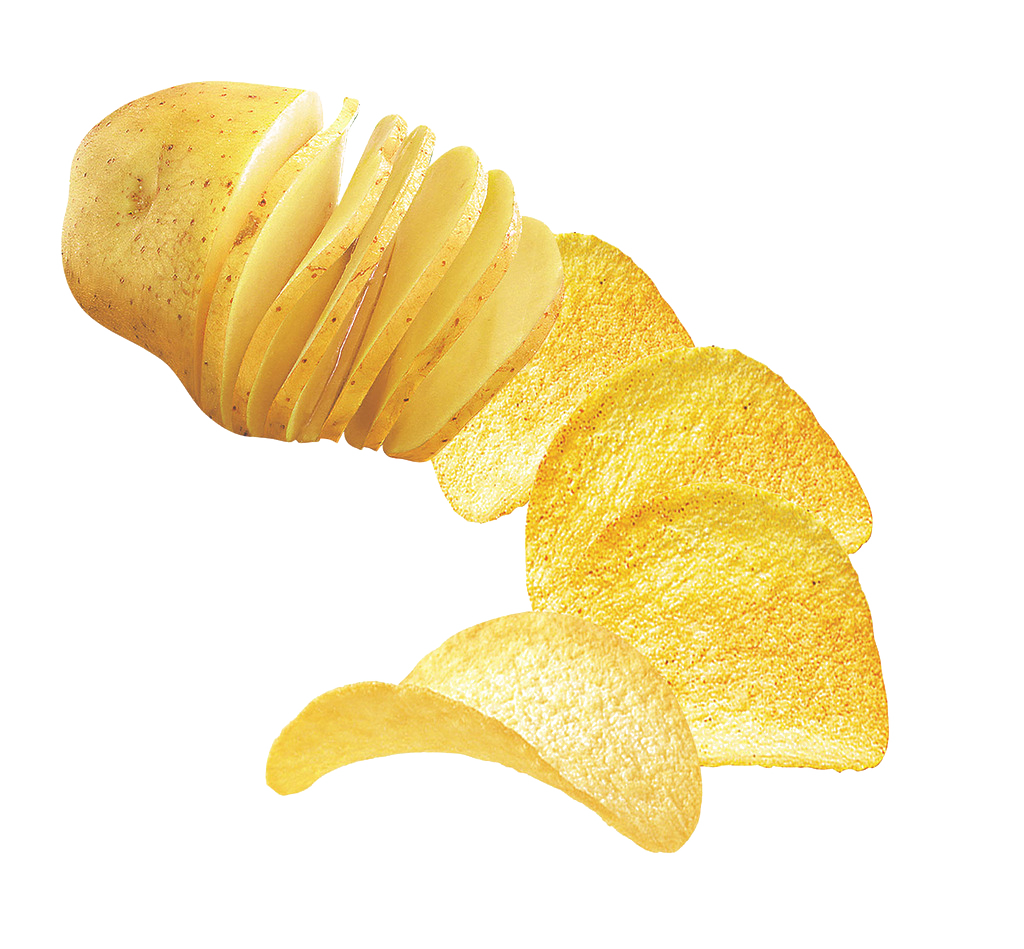
Potatoes need to be received, inspected, stored, washed, peeled, sliced, fried, seasoned, packed, labelled, stored as finished goods, and delivered. At each point, the company needs to know what material was used, which batch it came from, which production order it belongs to, what quality checks were completed, and where the finished product was sent.
Food production does not allow “close enough.” The business needs consistency, traceability, and the ability to respond quickly when something changes.
Simulate Before You Implement
Before the production process is fully active, SIX ERP can help create a digital model of how the factory should work.
This begins with the Bill of Materials, or BOM. The BOM defines what is needed to make a finished product. For potato chips, this may include potatoes, oil, seasoning, packaging materials, labels, cartons, pallets, and other production inputs.
The system also defines the routing. This describes the sequence of work: receiving raw materials, preparation, slicing, frying, seasoning, quality control, packaging, palletising, warehouse storage, and dispatch.
By modelling these processes before full implementation, the factory can review material requirements, production capacity, expected processing times, work-centre load, warehouse needs, and possible bottlenecks.
This is not simply a theoretical exercise.
It allows the business to ask practical questions before problems become expensive. Can the fryer keep up with packaging speed? Is there enough space for raw materials and finished goods? Are materials available when production needs them? How does a delay in potato delivery affect the production schedule? What happens when one production line stops unexpectedly?
A digital model gives the company a safer place to test decisions before they affect the real factory floor.
Real Sensors Bring the Process to Life
Digital planning is powerful, but every factory eventually meets reality.
Sensors, machine data, scales, temperature controls, barcode scanners, and operator feedback provide the real-time information needed to understand what is actually happening in production.
For example, the system may receive information about production speed, machine availability, material consumption, temperature, product weight, downtime, waste, energy use, and completed quantities.
This information can help the production team compare the plan with the actual result.
If frying time changes, if a line produces more waste, if packaging is slower than expected, or if a material batch creates quality variation, the factory can investigate earlier.
The purpose is not to create a factory that blindly follows data. The purpose is to give experienced operators and managers better information for making the right decision.
Smart Manufacturing Means Continuous Adjustment
No simulation can predict every detail of a live production environment.
Machines behave differently under load. Sensors may require calibration. Raw materials may vary. Operator workflows may reveal steps that were not visible during planning. Production speed may create pressure in packing, storage, or dispatch.
These are not signs that the project has failed. They are part of building a real smart factory.
During implementation, SIX ERP works with the production team to review actual results and improve the process. Sensor feedback can be checked. Machine response times can be measured. Automation rules can be adjusted. Warehouse rules can be refined. Production parameters can be updated based on real evidence.
A smart manufacturing system should not be frozen on go-live day. It should become better through use.
Quality and Traceability Must Be Built Into the Process
Food manufacturers need to know more than how much they produced.
They need to know which raw-material batch was used, when it entered the factory, which production order it was assigned to, which quality checks were completed, and where the final product was delivered.
This is called traceability.
If a quality issue appears, the company must be able to identify the affected batch quickly. It may need to review supplier information, production records, machine settings, quality checks, warehouse movements, and customer deliveries.
A connected ERP system supports this process by linking purchasing, receiving, stock, production orders, material consumption, quality records, finished goods, and sales deliveries.
This protects the customer, the brand, and the business.
The Result: Better Control, Less Waste, More Confidence
When planning, production, warehouse operations, quality checks, and reporting are connected, the factory gains a clearer view of its performance.
The business can reduce manual data entry, improve material planning, control inventory more accurately, identify waste earlier, and understand real production costs.
It can also improve product consistency. When data from machines, operators, quality control, and finished-goods performance is available in one place, the team can see patterns that would otherwise remain hidden.
For the client, the result is more than a faster line.
It is a factory that can respond to changes in raw-material quality, customer demand, production capacity, energy use, and market requirements with more confidence. It creates a foundation for new product lines, larger production volumes, more advanced automation, and stronger compliance processes.
The factory becomes more than a place where products are made. It becomes a connected system that learns from its own operation.
The Future of Food Production Is Connected
The future of food manufacturing will combine practical factory knowledge with reliable digital information.
Experienced operators will remain essential. They understand the product, the machines, the materials, and the reality of the production floor. ERP, sensors, automation, and AI-supported analysis will give them better tools to make faster and more informed decisions.
SIX ERP supports this journey by connecting the business from raw-material purchasing to final delivery. It brings together warehouse management, production planning, bills of materials, work orders, traceability, quality-related processes, finance, customer orders, and Business Intelligence.
A smart factory is not built by installing more technology. It is built by connecting the right information to the right people at the right moment.
Your Manufacturing Challenge Is the Starting Point
Every factory has its own challenges.
You may need to reduce waste, improve production planning, control raw-material costs, connect warehouse and production data, increase traceability, automate routine work, or prepare for expansion.
SIX ERP helps manufacturers turn these challenges into practical, scalable solutions.
Talk to the SIX ERP team about your production process. Together, we can build the structure, data flow, and smart manufacturing foundation your factory needs to grow with more control, less waste, and stronger confidence.