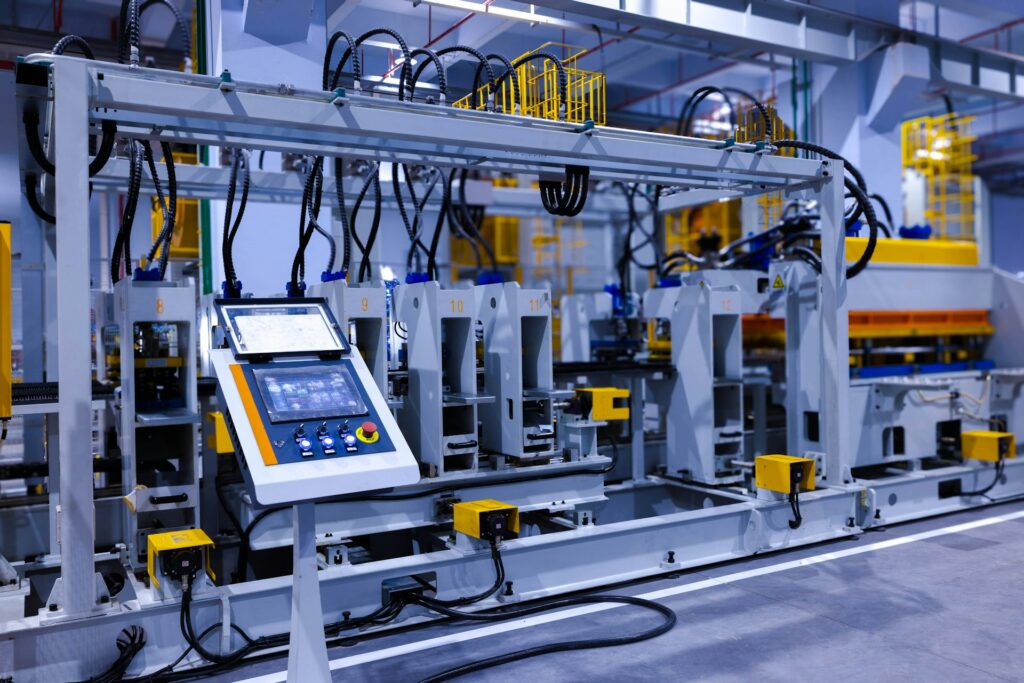
From historical forecasting to live, controlled planning that connects demand, materials, machines, people, suppliers, and customer promises.
“The future of manufacturing is not a factory that reacts faster. It is a factory that sees risks earlier and prepares the right response before production stops.”
Manufacturers have always planned.
They forecast demand, order materials, schedule production, assign people, manage machines, and promise delivery dates to customers. Traditional ERP and MRP systems have made this process more structured and reliable.
But traditional planning has a weakness: it often works from a fixed moment in time.
A plan may be correct on Monday morning. By Tuesday afternoon, a supplier may delay a shipment, a customer may increase an order, a machine may require maintenance, or a quality issue may reduce available stock. The plan may still look correct on paper while becoming impossible in reality.
This is where agentic AI can change manufacturing.
Agentic AI does not only answer questions or create reports. It can work toward a defined business goal. It can review current data, identify a risk, use approved ERP tools, compare possible solutions, explain the consequences, and prepare the next action for human approval.
It turns planning from a fixed schedule into a living operational process.
What Is Agentic AI in Manufacturing?
Agentic AI is an AI system that can plan, reason through steps, use approved tools, check results, and adapt when conditions change.
In manufacturing, an agent may receive a goal such as:
“Protect customer delivery dates while reducing material shortages and avoiding unnecessary inventory.”
To support that goal, the agent can review:
- Open customer orders.
- Sales forecasts.
- Quotation activity.
- Current inventory.
- Reserved materials.
- Purchase orders and supplier ETAs.
- Supplier delivery performance.
- Bills of Materials.
- Production orders.
- Work-centre capacity.
- Machine availability.
- Planned maintenance.
- Labour calendars.
- Quality results.
- Scrap rates.
- Transport capacity.
- Customer priority.
- Margin and cash-flow impact.
It can then identify risks, compare possible responses, and prepare a recommendation.
For example:
“Production Order MO-381 is at risk because the delivery date for a critical motor moved by seven days. The delay affects two customer orders worth €96,000. Three options are available: use approved substitute motor B, move final assembly to another work centre, or prioritise customer order SO-910 and delay a lower-priority order. The expected cost, delivery effect, and capacity impact are shown for approval.”
This is more useful than a red warning icon.
A warning tells you that something is wrong. An agent helps you understand what to do about it.
Why Traditional MRP Is Not Always Enough
Material Requirements Planning is essential. It uses Bills of Materials, demand, inventory, lead times, and production schedules to calculate what materials are needed and when.
But standard MRP is often based on assumptions:
- Supplier lead time is fixed.
- Machine capacity is fixed.
- Material quality is consistent.
- Demand follows historical patterns.
- Production runs according to plan.
- Labour is available as scheduled.
- Transport arrives as expected.
Real factories do not work like that.
Supplier lead times change. Demand becomes volatile. Customer orders move. Machines fail. Materials arrive late or fail quality checks. Operators are absent. Energy costs shift. Freight capacity changes.
Traditional MRP can tell you what should happen if all assumptions are correct.
Agentic AI helps you prepare for what may happen when reality changes.
From Forecasting to Demand Sensing
A standard forecast often looks at previous sales. It may compare this month with the same month last year, apply a seasonal adjustment, and calculate expected demand.
This is useful, but it can be too slow for changing markets.
Agentic AI can support demand sensing by combining more current signals, including:
- Historical sales.
- Open sales orders.
- Customer forecasts.
- Quotation activity.
- CRM opportunity probability.
- E-commerce interest.
- Distributor stock levels where available.
- Planned promotions.
- Product launches.
- Price changes.
- Customer buying patterns.
- Returns and cancellations.
- Market or weather signals where relevant.
- Public holidays and seasonal events.
For example, a food manufacturer may see increased demand before a holiday period. A furniture manufacturer may notice a major retailer requesting more quotations for a specific collection. An industrial supplier may see that a customer is ordering spare parts more frequently, suggesting a future equipment-maintenance cycle.
The agent does not wait for the final purchase order to appear. It identifies signals that demand may be changing.
Material-Risk Prediction: More Than “Stock Is Low”
Low stock does not always mean a production risk.
A material may be low in one warehouse but available in another. It may have a confirmed purchase order arriving tomorrow. It may not be required until next month. It may have an approved substitute. Or it may be a critical bottleneck that will stop production within hours.
Agentic AI can look at the full context.
It can assess:
- Current stock.
- Reserved stock.
- Available-to-Promise quantity.
- Material demand from open production orders.
- Supplier lead time.
- Actual supplier delivery reliability.
- Confirmed ETAs.
- Minimum order quantities.
- Shelf life.
- Approved alternatives.
- Price changes.
- Quality status.
- Transport status.
- Customer delivery priority.
- Margin impact.
Instead of saying, “Material X is below minimum level,” it can say:
“Material X will become a production constraint in six days. It affects four work orders and three customer deliveries. Supplier A has a confirmed delay. Supplier B can deliver 60% of the required volume within three days at a 7% higher price. Existing stock in Warehouse 2 can cover the remaining urgent order. Approval is required to transfer stock and create a draft purchase order.”
This is material planning with business context.
Capacity Prediction: Planning Machines, People, and Time
A production plan is only useful if the factory has the capacity to execute it.
Agentic AI can help planners understand real capacity rather than calendar capacity.
It can consider:
- Planned and actual machine runtime.
- Setup and changeover time.
- Machine downtime.
- Maintenance history.
- Labour availability.
- Skills and certifications.
- Shift changes.
- Operator absence.
- Tooling availability.
- Quality-inspection capacity.
- Warehouse and internal-transport capacity.
- Outsourced production capacity.
- Energy tariffs.
- Delivery commitments.
For example, a machine may technically have eight available hours on the calendar. But if it usually loses 90 minutes to changeovers, has a maintenance warning, and requires an operator who is absent, the usable capacity is much lower.
An agent can identify that risk and suggest a safer plan.
It may recommend:
- Grouping similar production orders to reduce changeovers.
- Moving a work order to an alternative machine.
- Scheduling maintenance before a critical production run.
- Using an approved subcontractor.
- Increasing a planned batch before a maintenance window.
- Delaying a low-priority order to protect a contract customer.
- Adding temporary labour only where the margin and service impact justify it.
Capacity planning should reflect what the factory can actually deliver—not what the calendar says it should deliver.
The Connection Between Demand, Materials, and Capacity
The real power of agentic manufacturing comes from connecting three areas that are too often planned separately:
- Demand: What customers are likely to buy and when.
- Materials: What components and raw materials are available or at risk.
- Capacity: What the factory can realistically produce and ship.
A change in one area affects the other two.
If demand increases, materials and capacity may become constrained.
If a supplier is delayed, production capacity may become idle.
If a machine stops, the business may need to change customer delivery dates or purchase materials differently.
If a high-margin order arrives, the business may need to reconsider which production orders deserve priority.
Agentic AI can continuously assess these relationships.
It does not only ask, “Can we make this product?” It asks, “Can we make it, with the right materials and capacity, by the promised date, without harming more important commitments?”
A Realistic Example: A Supplier Delay Threatens Production
Imagine a manufacturer of industrial equipment.
The company has three open production orders requiring the same electronic control unit. The control unit is supplied by one primary supplier with a stated lead time of 14 days.
On Monday, the supplier updates the ETA. The shipment will arrive six days late.
Without action, the delay will affect:
- One urgent customer order with a contractual delivery date.
- One high-margin order.
- One lower-priority replenishment order.
A traditional system may show that the material is late.
An agentic ERP can go further.
It can:
- Identify every work order affected.
- Check the priority and margin of each customer order.
- Review available stock in all warehouses.
- Identify approved substitute components.
- Check alternative suppliers and their lead times.
- Review engineering approval requirements.
- Estimate the cost of expedited shipping.
- Check whether production can be resequenced.
- Calculate the customer-service impact of each option.
- Prepare draft purchase orders or transfer orders.
- Create an approval request for the production manager.
The recommendation may look like this:
“Protect customer order SO-722 by allocating available control units from Warehouse B. Use Supplier B for 40 units at an additional cost of €2,800. Delay replenishment order MO-309 by four days. This protects €185,000 in customer revenue and avoids contractual penalties. Engineering approval is required for substitute component B.”
This is not automatic decision-making without control.
It is decision preparation with clear reasoning.
Quality AI: Detecting Small Problems Before They Become Scrap
Quality issues often begin as weak signals.
A small increase in rejected items. A slight change in measurement results. A rise in machine temperature. A higher-than-normal amount of material consumption. A repeated operator note.
On their own, these signals may not trigger action. Together, they may indicate a developing issue.
Agentic AI can review quality results alongside production, machine, and material data. It can identify patterns such as:
- Scrap increasing after a supplier change.
- Higher rejection rates on a specific machine.
- Quality drift after a tool reaches a certain number of cycles.
- Material consumption rising on one production line.
- Rework increasing during a specific shift.
- A batch of incoming material creating repeat issues.
It can then recommend practical actions:
- Increase inspection frequency.
- Quarantine a material batch.
- Inspect a tool or machine.
- Review a supplier delivery.
- Adjust a process parameter.
- Schedule maintenance.
- Pause a high-risk batch for quality review.
The goal is not to react faster to scrap. It is to prevent scrap from becoming normal.
Predictive Maintenance: Protecting Production Before Breakdown
Machine failure is expensive because it affects more than maintenance.
It can delay work orders, create overtime, force emergency purchasing, disrupt labour planning, and damage customer delivery performance.
When maintenance, machine, and production data are connected, AI can help identify early warning signs.
These may include:
- Repeated small stoppages.
- Longer cycle times.
- Abnormal vibration.
- Temperature changes.
- Increased energy use.
- Quality drift.
- Unusual maintenance frequency.
- Spare-part consumption.
- Operator-reported issues.
An agent can then compare the risk of a planned maintenance stop with the risk of an unexpected breakdown.
For example:
“Machine M-12 shows a rising probability of bearing failure. A planned three-hour maintenance window on Thursday would protect two major production orders next week. Required spare part is available in stock. Delaying maintenance creates an estimated risk of 18 hours of unplanned downtime.”
Predictive maintenance protects both machines and customer promises.
Digital Twins: Test Before You Change the Factory
A digital twin is a virtual model of a product, machine, production line, warehouse, or manufacturing process.
It allows companies to test a change before applying it in real operations.
For example, a digital twin can help answer:
- What happens if we move this production order to another line?
- Can we combine these two batches and reduce changeover time?
- What happens if a machine is unavailable for two days?
- Can we accept a new large customer order?
- How would a supplier delay affect our schedule?
- Which production sequence gives the best delivery result?
- Would a different batch size reduce waste?
Agentic AI can use a digital twin or planning simulation to compare options before recommending a change.
This is especially useful in complex manufacturing environments where one decision can affect materials, people, machines, delivery dates, energy use, and margin.
A simulation does not guarantee the future. But it helps companies make better choices before committing the real factory to a risky plan.
Human Approval Is Still Essential
Agentic AI should not be allowed to change critical business processes without clear rules.
The right level of autonomy depends on the risk.
For example, an agent may be allowed to:
- Monitor data.
- Identify risks.
- Create alerts.
- Prepare reports.
- Suggest production changes.
- Draft purchase orders.
- Create transfer-order proposals.
- Prepare customer communication.
- Request approval.
It should require human approval before it:
- Sends a purchase order.
- Changes a production schedule.
- Uses a substitute material.
- Changes product quality rules.
- Changes customer delivery commitments.
- Adjusts product pricing.
- Stops a production line.
- Releases sensitive data.
The agent should make the right action easier. It should not remove accountability from the people responsible for the business.
How SIX ERP Supports Agentic Manufacturing
SIX ERP can provide the connected operational foundation that agentic AI needs.
The system can connect:
- Sales orders and customer forecasts.
- CRM opportunities and quotations.
- Product data and Bills of Materials.
- Inventory, batch, lot, and serial-number tracking.
- Purchasing and supplier records.
- Supplier lead-time performance.
- Production orders and routings.
- Machine and work-centre capacity.
- Quality inspections and non-conformities.
- Warehouse movements.
- Maintenance records.
- Delivery schedules.
- Finance, margin, and cash-flow data.
- Approval workflows and audit trails.
This creates a controlled environment where AI can analyse real operational data, prepare recommendations, and support managers with clear options.
The ERP remains the source of truth. AI becomes the layer that helps teams understand and act on that truth faster.
How to Start
Do not begin by trying to build a fully autonomous factory.
Start with one measurable, high-value problem.
Good first use cases include:
- Predicting material shortages.
- Monitoring supplier lead-time drift.
- Identifying production orders at risk.
- Recommending purchase-order timing.
- Detecting quality anomalies.
- Improving production sequencing.
- Predicting machine-maintenance needs.
- Forecasting demand for high-value or volatile items.
- Identifying inventory likely to become obsolete.
Choose one product family, production line, or supplier group. Define the current baseline. Measure stockouts, rush orders, delivery delays, scrap, downtime, and planning effort.
Then introduce AI as a controlled assistant.
Start with visibility. Move to recommendations. Add controlled action only after trust has been earned.
The Future of Manufacturing Planning
The most successful manufacturers will not use AI simply because it is new.
They will use it because it helps them reduce uncertainty.
They will see material risks earlier. They will plan capacity more realistically. They will protect customer delivery dates. They will reduce waste and emergency work. They will make more confident decisions with less manual effort.
Agentic AI does not replace the experience of a production planner, buyer, engineer, or plant manager.
It gives those people a stronger operational partner.
The future factory is not a factory without people. It is a factory where people spend less time chasing information and more time making the decisions that create value.
SIX ERP helps manufacturers connect the data, workflows, approvals, and operational intelligence needed to take that step.