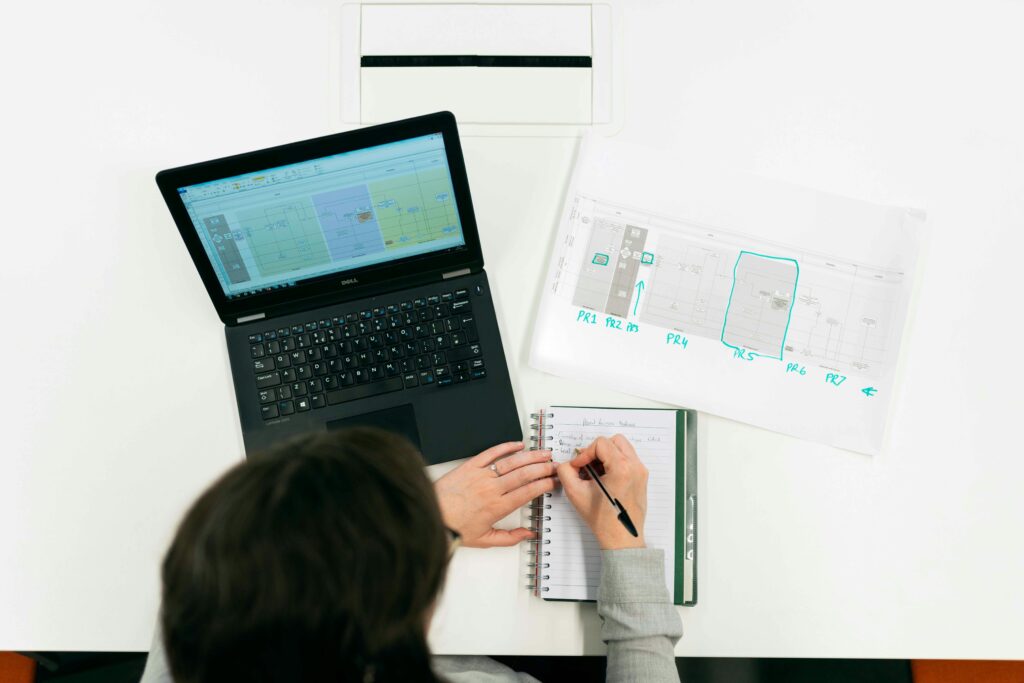
Taking informed decisions that make business great again!
“Even when a specialist tool is better at one specific task, the value of having one reliable system of record can be greater than the inconvenience of using separate tools.”
Running a company becomes more difficult as it grows. At the beginning, it may be possible to manage sales in Excel, invoices in accounting software, stock in another system, and customer information in emails or personal notes. But this approach creates problems over time. People enter the same data several times, departments work with different numbers, and important information is hard to find.
This is where an ERP system becomes important.
ERP means Enterprise Resource Planning. It is a business management system that connects the most important parts of a company in one place. Depending on the business, this can include sales, customer relationships, purchasing, warehouse management, production, finance, projects, HR, service, and reporting.
The main purpose of ERP is not simply to replace Excel or add more screens for employees. Its purpose is to create one connected way of working. When a sales order is confirmed, the warehouse can see what needs to be delivered. Purchasing can see what needs to be ordered. Production can see what needs to be made. Finance can prepare the invoice. Management can see the real business result.
One Reliable Source of Information
The most valuable idea behind ERP is the single system of record.
This means that important business information is stored in one trusted system instead of being copied into many files and programs. A customer address, product price, stock quantity, sales order, or supplier invoice should not exist in five different places with five different versions.
When information is spread across many systems, problems are almost guaranteed. Sales may promise a product that is no longer in stock. Finance may work with old prices. The warehouse may prepare the wrong delivery. Management may receive reports that do not match.
An ERP system reduces these problems by connecting the data and the process. Everyone works from the same information, based on the same rules.
This does not mean that an ERP must replace every specialist tool a company uses. Some businesses need advanced software for engineering, design, machine control, e-commerce, transport planning, or other special work. The important point is that these tools should connect to the ERP where necessary. The ERP becomes the central business platform that keeps the company’s core data organized and consistent.
ERP Is More Than Financial Software
Financial software is useful for managing income, expenses, cash flow, invoices, and accounting records. For some very small businesses, this may be enough.
However, financial software usually shows the result of work after it has already happened. It can tell you what was invoiced, what was paid, and what was spent. It normally does not manage the full process that created those numbers.
ERP goes further. It connects finance with the operational side of the business.
For example, an ERP can show that a customer order has been received, that stock is not available, that a purchase order must be created, that goods are expected next week, and that the final delivery will affect revenue and profit. It can also show whether a project is profitable, whether a product creates too much waste, or whether a customer has unpaid invoices.
Financial software answers the question, “What happened to our money?” An ERP also helps answer, “Why did it happen, what is happening now, and what should we do next?”
Designed for people, powered by innovation.
The Real Value of ERP
The real value of ERP is not in the number of modules or features. It is in the quality of the decisions a company can make when it has reliable information.
A manufacturer can see which materials are needed for upcoming production. A distributor can see which products are moving quickly and which products have been sitting in the warehouse for too long. A service company can see whether a technician has the right spare parts before going to the customer. A sales manager can see which opportunities are likely to close and which offers have been waiting too long.
ERP also helps businesses understand costs. A company may have strong sales but still lose money because purchasing prices are rising, production takes too long, stock is poorly managed, or certain customers require a lot of work for very little profit. When sales, purchasing, warehouse, production, and finance data are connected, these issues become easier to see.
This is why ERP supports better planning. It helps companies react earlier to low stock, supplier delays, growing costs, late payments, production bottlenecks, and customer demand changes.
How ERP Improves Daily Work
Without ERP, employees often repeat the same work. A sales order might be entered into a CRM, copied into an Excel file, sent to the warehouse by email, and then entered again into accounting. Every manual handover creates a risk of delay or error.
With an ERP, information can move through the process in a controlled way. The sales order can reserve stock, create a delivery task, trigger a purchase requirement, start a production order, and prepare an invoice. Employees still make decisions, check exceptions, and serve customers, but the system removes unnecessary repetition.
ERP also improves communication between departments. Instead of asking people for updates through long email chains, authorised users can see the current status in the system. This makes work faster and reduces misunderstandings.
For management, ERP creates a clearer overview. Reports and dashboards can show sales, stock, costs, receivables, project status, customer activity, and profitability. The company does not need to wait until the end of the month to discover that something is going wrong.
ERP Supports Growth and Compliance
Growth creates pressure. More customers mean more orders. More orders mean more stock, suppliers, deliveries, invoices, support requests, and employees. If the company continues to rely on disconnected files and personal knowledge, growth can quickly lead to chaos.
ERP gives the company a structure that can grow with it. New users, warehouses, products, locations, sales channels, and business entities can be added within a connected system.
ERP also helps businesses meet growing compliance requirements. Companies increasingly need clear records for finance, taxes, product traceability, customer data, approvals, employee information, and document history. An ERP can provide audit trails, user permissions, structured documents, and reliable reporting.
It does not replace accountants, lawyers, or compliance experts. But it gives them better data and a stronger base to work with.
Choosing the Right ERP System
Choosing an ERP system is an important business decision. The company should not choose software only because it looks modern or has the longest list of features.
The right system must support the company’s real work. Before making a decision, the business should understand where it loses time, where errors happen, which departments lack information, and which processes should be connected first.
It is also important to look beyond the purchase price. ERP is an investment in better processes, data quality, training, and long-term business control. The full cost includes implementation, support, data migration, employee time, integrations, and future growth. At the same time, the business should consider the cost of doing nothing: repeated work, lost information, stock errors, delayed deliveries, missed sales, and poor decisions.
A good ERP provider should understand the business process, not only demonstrate software screens. The implementation should be planned in clear phases, with practical training, realistic goals, and support after go-live.
Final Thoughts
ERP is not just software for large companies. It is a way of organizing a business around clear processes and trusted information.
It helps companies reduce duplicate work, remove data silos, improve communication, control costs, manage stock, serve customers better, and make decisions based on facts instead of assumptions.
The biggest benefit comes when the ERP becomes part of everyday work. When sales, purchasing, warehouse, production, finance, and management use one connected system, the business becomes more transparent, more efficient, and more ready to grow.
SIX ERP brings these important business areas together in one flexible platform. It helps companies build a reliable source of information, improve their processes, and turn everyday data into better decisions.