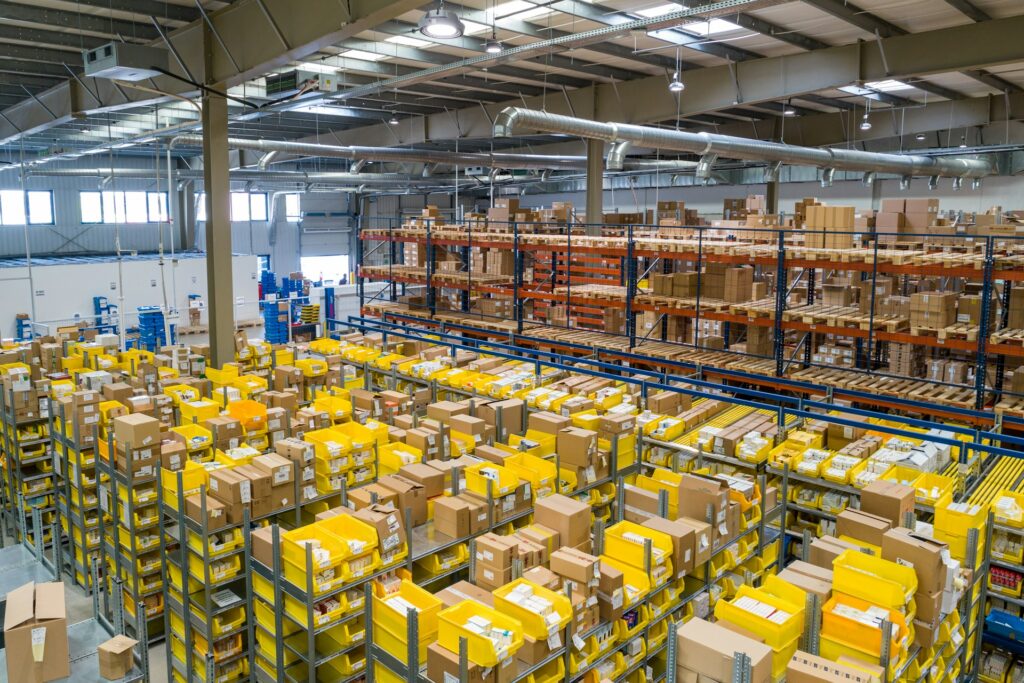
Features for those managing warehouses and need advanced management features
“People in supply chain know that the impossible often becomes possible — but only when the right information is available at the right time.”
A warehouse is much more than a place where goods wait on shelves. It is where customer promises become real.
Every day, goods arrive from suppliers, are checked, stored, moved, picked, packed, shipped, returned, counted, and sometimes written off. If even one of these steps is unclear, the company can lose time, money, stock, or customer trust.
A Warehouse Management System, usually called a WMS, helps control these daily warehouse activities. It gives employees clear information about what is in stock, where it is located, what needs to be moved, and what must be delivered next.
A good WMS does not simply record inventory. It helps the warehouse work in a planned, accurate, and efficient way.
A WMS Creates Control Over Stock Movements
Without a proper warehouse system, stock information is often uncertain. The system may say an item is available, but it may be in the wrong location, reserved for another order, damaged, expired, or simply missing.
A WMS creates a more reliable view of stock. It records when goods arrive, where they are stored, when they are moved, and when they leave the warehouse.
This means the business can answer important questions quickly. How many units are available? Where is the product located? Which stock is reserved? Which items are close to expiry? Which goods belong to a specific batch or serial number? Which customer order is waiting for picking?
When warehouse information is accurate, sales teams can give better delivery promises, purchasing teams can order at the right time, and management can make decisions based on real stock values.
Receiving Is the Start of a Reliable Process
Warehouse control begins when goods arrive.
Receiving is not only unloading a truck and putting products on a shelf. The company must confirm that the correct goods arrived, in the correct quantity, at the expected time, and in acceptable condition.
A WMS can connect incoming goods to purchase orders. Warehouse employees can check deliveries against what was ordered and record quantity differences, damaged goods, missing items, batch numbers, serial numbers, expiry dates, or quality issues.
This is important because a mistake at receiving can affect the entire process. If the wrong quantity is accepted, stock reports become unreliable. If damaged goods are stored as available stock, they may later be sent to a customer. If a batch is not recorded correctly, traceability becomes difficult.
A structured receiving process gives the warehouse a clean starting point.
Putaway Uses Space More Intelligently
After goods are received, they must be stored in the right place. This process is called putaway.
The best location depends on the product. Fast-moving items may need to be close to the picking area. Heavy goods may need floor storage or special equipment. Temperature-sensitive products may need a controlled environment. High-value items may require restricted access. Products with expiry dates may need a location strategy that supports first-expiry-first-out handling.
A good WMS can suggest the best storage location based on company rules. It can guide warehouse employees through a mobile device or scanner, ensuring that the right product reaches the right place.
This may sound like a small improvement, but it has a large effect. Better putaway reduces unnecessary walking, saves warehouse space, speeds up picking, and makes stock easier to find.
Picking Is Where Accuracy Matters Most
Picking means taking the correct products from storage for a customer order, production order, or internal transfer.
It is one of the most important and demanding warehouse tasks. If the warehouse picks the wrong product, wrong quantity, wrong batch, or wrong serial number, the customer experience suffers and the company pays for corrections.
A WMS can guide employees through the picking process. With barcode scanning, mobile devices, RFID technology, or voice-directed instructions, the system can confirm that the correct item is being picked from the correct location.
Depending on the operation, the warehouse may use different picking methods. Some warehouses pick one order at a time. Others combine several orders in one route. Larger operations may use zone picking, where each employee works in a specific warehouse area, or wave picking, where orders are grouped by delivery time, route, or customer priority.
There is no one best method for every business. The right method depends on the warehouse layout, number of orders, product range, staff, and delivery requirements.
Packing and Shipping Complete the Customer Promise
Once items are picked, they need to be checked, packed, labelled, and prepared for dispatch.
A WMS can help confirm that every item is included in the shipment. It can generate packing lists, delivery notes, shipping labels, pallet labels, and required transport documents. When connected to carriers or transport systems, it can also send shipment details and tracking information.
This creates a more professional delivery process. Customers receive the right goods, in the right quantity, with the right documents.
Shipping should not be treated as the end of warehouse work. It is the final proof that the business has kept its promise to the customer.
Seamless, smart, and stress-free — welcome to SIX ERP.
Returns Need Their Own Process
Returns are part of modern business, especially in e-commerce, distribution, retail, and technical service. They can happen because of damaged goods, wrong deliveries, warranty cases, customer changes, transport problems, or quality issues.
A returned product should never simply be placed back into available stock without checking it.
A proper returns process identifies the item, links it to the original order, records the reason for return, checks its condition, and decides what should happen next. The item may be returned to stock, sent for repair, returned to the supplier, moved to a quarantine area, written off, or used for spare parts.
A WMS helps make these decisions traceable. This protects stock accuracy and gives management useful information about recurring problems.
For example, if one product is returned more often than others, the business can investigate the reason. It may be a supplier quality issue, poor product information, incorrect packing, or a problem in the sales process.
Why a WMS Improves Warehouse Performance
The biggest benefit of a WMS is visibility.
Without a system, warehouse teams often depend on memory, paper lists, and personal experience. This can work in a very small operation, but it becomes risky as product numbers, order volumes, and warehouse locations increase.
A WMS gives the company live information about inventory, orders, locations, movements, and pending work. It helps identify bottlenecks before they become serious problems.
For example, managers can see whether receiving is delayed, whether picking is taking too long, whether stock differences are increasing, or whether a certain warehouse area is becoming too full.
A WMS also reduces manual data entry. Barcode scanners and mobile warehouse devices allow employees to confirm movements directly at the point where work happens. This improves accuracy and removes the delay between physical work and system updates.
The result is not only faster warehouse work. It is a more dependable business process.
A WMS Must Fit the Real Warehouse
Implementing a WMS should begin with understanding the warehouse as it really works today.
The company should review how goods arrive, where they are stored, how stock is counted, how orders are picked, how deliveries leave the building, and how returns are handled. It should also identify where time is lost, where errors happen, and which information employees struggle to find.
A business may discover that the main problem is not the lack of software. It may be unclear location labels, inconsistent product codes, poor warehouse layout, missing product dimensions, or unclear responsibilities.
Technology works best when it supports a well-designed process. Before implementation, the company should therefore clean product data, define storage locations, agree on stock movement rules, and decide how exceptions will be handled.
For example, what should happen when a delivery arrives with less stock than expected? Who approves a stock adjustment? Where are damaged goods stored? Can an employee override a picking instruction? These practical decisions make the difference between a system that helps and a system that is ignored.
Choosing Between a Standalone WMS and an Integrated ERP WMS
Some businesses use a standalone WMS. This can be suitable for very large, highly automated, or specialised warehouse operations that need advanced functions such as robotics, conveyor systems, complex wave planning, or highly detailed labour management.
However, many small and medium-sized businesses benefit more from a WMS that is directly integrated into their ERP system.
An integrated ERP WMS connects warehouse movements with sales orders, purchasing, production, customer records, invoices, and financial data. There is no need to copy information between separate systems or wait for stock updates to synchronize.
When a product is received, stock updates immediately. When a customer order is picked and shipped, the sales and invoicing process can continue. When production consumes materials, the warehouse and cost information remain connected.
For most growing businesses, this integration is one of the strongest benefits.
How to Measure Whether a WMS Is Worth It
A WMS is an investment, so the company should measure the improvement it creates.
The best results are usually visible in practical areas. Employees may spend less time searching for products. Stock differences may decrease. Orders may be picked faster. Fewer customers may receive incorrect deliveries. Warehouse space may be used better. Managers may receive more reliable inventory reports.
The company should not only compare the price of the software with the warehouse budget. It should also consider the cost of stock errors, returns, delayed deliveries, emergency purchases, unnecessary manual work, and unhappy customers.
A good WMS creates value when it improves daily work enough to reduce these hidden costs.
Final Thoughts
A Warehouse Management System helps businesses control the full movement of goods: receiving, put away, storage, picking, packing, shipping, returns, and stock counting.
It gives warehouse teams clearer instructions, helps managers see what is happening in real time, and gives customers more accurate deliveries.
SIX ERP WMS connects warehouse management with sales, purchasing, production, CRM, finance, and reporting. This gives businesses one reliable view of stock and a stronger process from supplier delivery to final customer shipment.