
How autonomous systems, real-world data, and modern control protocols turn ERP from record-keeping into resource prediction.
“Agentic AI is not about replacing business decisions. It is about giving people a system that can investigate problems, test options, and prepare the right action faster.”
Large language models taught software how to read, write, summarize, and communicate in natural language. Agentic AI is the next step.
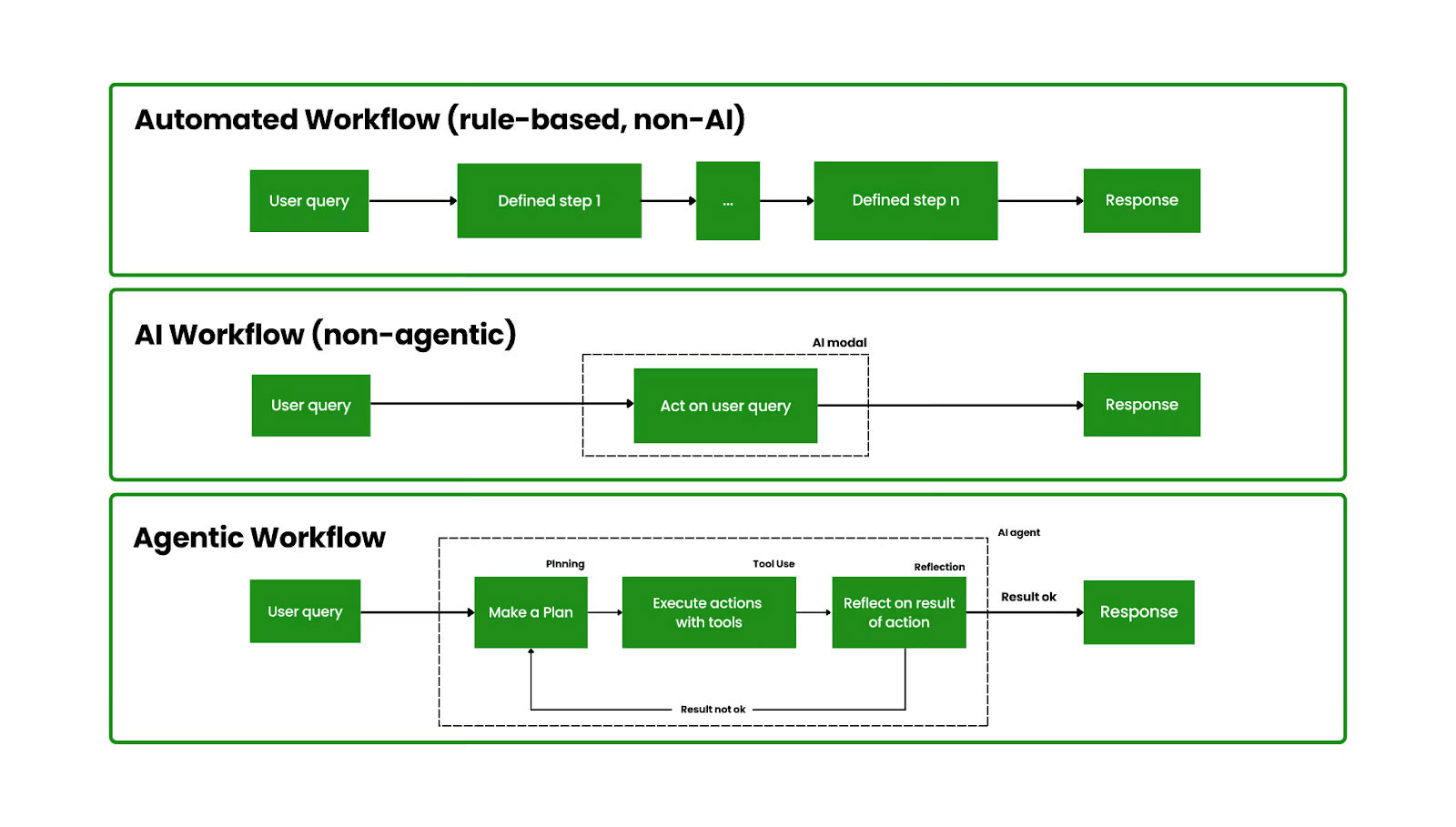
Instead of waiting for a user to ask a question, an AI agent can work toward a defined goal. It can break a task into smaller steps, use approved tools, check the outcome, gather more information when needed, and prepare the next action.
In an ERP environment, this changes the role of the system. Teams no longer need to scroll through reports, compare spreadsheets, and send emails across departments just to understand why a delivery is at risk. An agent can review sales demand, material availability, supplier lead times, production capacity, machine calendars, and customer commitments. It can then prepare several possible solutions, explain the risks and costs of each one, and send the best option to the right manager for approval.
ERP stops being only a record of what happened. It becomes an active business partner that helps teams understand what is happening and decide what to do next.
From Large Language Models to Agentic Systems
Large language models are strong at understanding questions and creating useful answers. They can explain a report, summarize a customer meeting, draft an email, or help an employee find information.
But a business often needs more than an answer. It needs a well-prepared action.
An agentic system combines language understanding with planning, tool use, verification, and feedback. Instead of answering, “What is the lead time for this material?” it can investigate further:
- The supplier lead time has increased.
- The material is needed for three production orders.
- One customer delivery date is now at risk.
- A second supplier may be available at a higher price.
- Re-sequencing production could protect the most important order.
The agent can then present clear options, including their expected cost, timing, and risk. It can run approved ERP queries, compare scenarios, and use small simulations before recommending a path.
If the information is incomplete, the agent should not guess. It can request missing data, flag uncertainty, or ask a responsible employee to review the situation.
This closes the gap between analysis and execution—without removing human judgment.
What MCP Servers Do for ERP_
AI agents need a safe way to interact with business systems. This is where an MCP server becomes important.
MCP stands for Model Context Protocol. In simple terms, it is a controlled connection between AI and your ERP tools, data, documents, and workflows.
An MCP server can expose specific, approved actions such as:
- Read stock levels by warehouse, lot, batch, or serial number.
- Check supplier lead times and open purchase orders.
- Create a draft purchase order.
- Review work-center capacity.
- Retrieve a quality-control specification.
- Check customer delivery commitments.
- Prepare a maintenance request.
- Create an approval request for a manager.
The key word is controlled.
The AI agent does not receive unlimited access to the ERP database. It receives access only to the data and functions required for its role. Each action can include permission checks, validation rules, rate limits, approval requirements, and audit logs.
For example, an agent may be allowed to prepare a purchase-order draft, but not send it to a supplier without approval. It may recommend a price change, but the commercial manager must confirm it. It may identify a quality risk, but the quality team decides whether to stop the line.
MCP helps AI speak the language of business operations while keeping the ERP secure, stable, and accountable.
From Data Warehouses to Live Business Context
Historical data is valuable. It helps companies understand sales patterns, seasonal demand, supplier performance, and financial trends.
But daily operations depend on what is happening right now.
An agentic ERP becomes powerful when it can work with live context, including:
- New customer orders and changing delivery dates.
- Real-time inventory movements.
- Supplier shipment and ETA updates.
- Machine status and maintenance signals.
- Warehouse pick-rate and loading performance.
- Quality measurements and rejected batches.
- Energy prices, weather conditions, transport disruptions, or market signals where relevant.
- Customer communication, quote activity, and order behavior.
A normal report may show that stock is low. An agentic ERP can go further. It can check whether the material is needed immediately, whether a substitute is approved, whether another warehouse has available stock, whether the supplier shipment is delayed, and whether the production plan can be changed safely.
Live data tells the system what is happening. Business context helps it understand what that means.
When AI also has access to approved procedures, contracts, work instructions, quality requirements, and company policies, it can make recommendations that are more consistent with the way the business actually operates.
From Descriptive Analytics to Predictive and Prescriptive Intelligence
Traditional dashboards are useful because they show what has happened. They can show revenue, stock levels, late deliveries, cash flow, output, scrap, and margin.
Predictive analytics looks ahead. It estimates what may happen next.
Prescriptive intelligence goes one step further. It asks: What should we consider doing now?
An AI agent can combine several signals at once. It may notice a small increase in rejected parts on one production line, compare it with machine performance data, review the last material delivery, and identify a possible quality issue before it creates a major scrap event.
It can then propose actions such as:
- Inspect a machine before the next production run.
- Increase quality checks for a specific batch.
- Use an approved alternative material.
- Adjust batch size or production sequence.
- Move a customer delivery window before a missed deadline becomes unavoidable.
- Place a controlled purchase order with an alternative supplier.
Each recommendation should include the expected effect on cost, margin, inventory, delivery performance, and customer service.
Dashboards inform. Agentic systems investigate, compare, and prepare action.
Resource Prediction Is More Powerful Than Static Planning
Traditional MRP and resource-planning systems often run on a schedule. They create a plan based on the information available at that moment.
_That plan can become outdated quickly.
A supplier may delay a delivery. A customer may change an order. A machine may need maintenance. A shift may be understaffed. A key material may suddenly become unavailable.
Agentic ERP supports a more continuous planning model. Instead of treating planning as a once-a-week or once-a-month exercise, it can reassess the plan as important conditions change.
It can estimate:
- When a machine is likely to become available based on real runtime, not only calendar time.
- Which work centers are becoming bottlenecks.
- Whether a labor shortage will affect a planned production order.
- Which materials are at risk based on supplier reliability, not only stated lead time.
- Whether transport capacity supports promised delivery dates.
- Where a safety buffer is truly needed—and where it only creates unnecessary stock.
If a supplier delay appears, the agent can compare alternatives. It can assess substitute suppliers, available stock, new lead times, transport costs, quality requirements, and the impact on customer orders.
Planning becomes a living process that adjusts as reality changes.
Industry 4.0: Connecting Digital Data to Physical Production
Industry 4.0 connects machines, sensors, warehouse equipment, quality systems, and business software. Agentic ERP gives that connection a practical purpose.
When machine data, IoT sensors, MES information, WMS activity, and ERP records work together, AI can help companies make better decisions across the entire production process.
For example, an agent can:
- Detect unusual machine vibration, temperature, or cycle-time changes.
- Compare a quality measurement with approved tolerance limits.
- Identify a growing scrap trend before it becomes a major loss.
- Schedule maintenance before a likely breakdown.
- Check whether spare parts are available before planning the service.
- Re-sequence production to reduce changeover time.
- Evaluate whether a delivery promise can still be met after a machine interruption.
With a digital twin—a virtual model of a production line or process—the system can test possible changes before they are applied in the real factory. It can simulate a different production sequence, estimate the effect on throughput, identify bottlenecks, and compare several scenarios.
The goal is not to let AI control a factory without supervision. The goal is to help engineers, planners, and managers make safer decisions earlier.
Human Control and Clear Guardrails
Agentic AI must work within clear boundaries.
Every company should define what an agent can read, what it can suggest, what it can prepare, and what it may never do without approval.
For example:
- An agent may read stock and production data.
- It may create a draft purchase order.
- It may prepare a revised work order.
- It may notify a manager of a customer-delivery risk.
- It should require approval before sending supplier orders, changing prices, releasing payroll information, or stopping a production line.
Every important action should be recorded with the relevant inputs, outputs, recommendation, approval status, and reason for the decision.
This is especially important for sensitive areas such as finance, HR, pricing, regulated production, personal data, and quality compliance.
Autonomy without accountability is not business-ready AI. The right model is controlled autonomy with clear human ownership.
A Practical Agentic ERP Architecture
A reliable agentic ERP system does not need to be one large, risky black box. It can be built from clear layers that each serve a specific purpose.
The MCP layer provides safe, documented ERP tools and data access.
The context layer stores the business knowledge the agent needs, including procedures, quality requirements, contracts, technical specifications, work instructions, and approved policies.
The event layer receives updates from ERP, CRM, WMS, MES, machines, sensors, supplier systems, customer portals, and external sources.
The agent runtime plans tasks, calls approved tools, checks the results, compares options, and stops when it needs more information or human approval.
The policy layer controls access rights, approval thresholds, quotas, data handling, logging, and audit requirements.
The user layer brings AI into the places where people already work: next to purchase orders, production orders, customer records, quality checks, warehouse tasks, and management dashboards.
The technology should support the workflow—not force people into another isolated AI tool.
High-Impact Use Cases to Start With
The best first AI projects are not the biggest ones. They are the ones with a clear problem, measurable value, available data, and a defined owner.
Strong starting points include:
- Demand and supply forecasting that combines historical sales with live order intake, customer quotations, seasonality, supplier risk, and available capacity.
- Material-risk prediction that identifies which materials may affect production before a shortage occurs.
- Predictive maintenance that uses machine and service data to reduce unplanned downtime and emergency spare-part purchases.
- Dynamic production scheduling that considers capacity, changeover time, material availability, energy costs, maintenance windows, and customer priorities.
- Quality copilots that detect unusual quality trends, guide operators through approved checks, and reduce scrap or rework.
- Intelligent purchasing that recommends reorder quantities and timing based on demand risk, supplier reliability, cash limits, and storage capacity.
- Finance simulation that shows the expected cash-flow effect of late payments, changed supplier terms, discounts, or delayed production.
- Customer-service assistants that summarize customer history, delivery risks, open tickets, and next-best actions before a team member responds.
Every successful use case builds on the same foundation: secure tools, clean context, live data, clear policies, and measurable outcomes.
Measure Results, Not AI Activity
Agentic ERP should not be judged by how impressive the conversation sounds. It should be judged by whether it improves the business.
Useful measurements include:
- Higher demand and material forecast accuracy.
- Better on-time and in-full delivery performance.
- Shorter production and purchasing lead times.
- Fewer unplanned machine stops.
- Lower scrap, waste, and rework.
- Fewer stockouts and emergency purchases.
- Reduced excess inventory.
- Faster response to customer and supplier issues.
- Improved cash-conversion cycle.
- Less manual reporting and data entry.
- Faster decision-making with documented reasons.
Each recommendation should show what the agent considered, what it expects to happen, and how the result will be measured after implementation.
The objective is not “AI everywhere.” The objective is steady, visible improvement in the metrics that matter.
The Next Step for ERP
Agentic AI will not remove the need for experienced planners, production managers, buyers, accountants, or engineers. Their knowledge becomes even more important because it defines the rules, priorities, and guardrails the system must follow.
What changes is the speed at which teams can move from a problem to a well-prepared decision.
With SIX ERP, AI agents can help connect live operational data, business rules, manufacturing intelligence, and human approval into one practical process.
The future is not an ERP that only records the past. It is an ERP that helps your people prepare for the future—one responsible decision at a time.