Why every company needs a properly thought over data management solution…
“Data is only valuable when people can trust it, understand it, and use it at the right moment.”
Every business creates data. A customer sends an enquiry. A sales team prepares an offer. A warehouse receives goods. A supplier invoice arrives. An employee records working time. A manager approves a purchase.
Each of these actions creates information. The real challenge is not collecting more data. The challenge is keeping it accurate, secure, connected, and useful.
Many companies still store important information in separate Excel files, email inboxes, paper documents, personal folders, and different software systems. This makes daily work slower. Employees spend time searching for information, asking colleagues for updates, and checking whether a number is correct.
Good data management solves this problem. It gives the business a clear way to collect, organise, protect, and use information.
What Data Management Really Means
Data management is the way a company handles its information from the moment it is created until it is no longer needed.
It includes customer information, sales orders, supplier data, warehouse stock, invoices, employee records, production data, contracts, product information, and much more.
A good data management approach answers simple but important questions. Where is the information stored? Who is allowed to change it? How do we know it is correct? Can the right people find it quickly? Is it protected from loss, misuse, or unauthorised access?
The goal is to create one reliable source of information. When sales, warehouse, purchasing, finance, and management all work with the same trusted data, the company can operate with more control.
Start With the Data That Matters Most
Many businesses try to improve everything at once. This usually creates confusion. A better approach is to start with the data that has the biggest effect on daily work and business decisions.
For most companies, this includes customer records, supplier records, products, prices, stock levels, sales orders, purchase orders, invoices, and payments.
The company should first decide what each important record means. For example, a customer record should have one official name, one correct tax number, clear contact persons, agreed payment terms, and a defined owner inside the business. A product record should have a clear code, description, unit of measure, price rules, stock settings, and, where needed, technical or production information.
This may sound simple, but poor master data causes major problems. If one customer exists under three different names, reports become unreliable. If a product has the wrong unit of measure, stock and purchasing can quickly become incorrect. If prices are stored in private files instead of the central system, sales teams can make offers that are not profitable.
Clean data is not an IT task only. It is a business responsibility.
Collect Data Correctly From the Beginning
Good data management begins at the point where data enters the business.
Information should be collected in a structured way. A customer enquiry should create a proper lead record. A new supplier should be entered using a defined approval process. A warehouse receipt should be recorded when goods physically arrive. An invoice should be linked to the right supplier, order, and financial account.
The more data is entered correctly at the beginning, the less time the company spends fixing mistakes later.
This does not mean employees should complete endless forms. It means that the system should require the information that is truly necessary and make the rest easy to add when needed. Good business software uses validation rules, dropdown lists, automatic checks, and clear workflows to prevent common mistakes.
For example, the system can prevent a user from saving a supplier without a tax number, creating a product without a unit of measure, or confirming a delivery with insufficient stock. These small controls protect data quality before errors spread through the company.
Turn Raw Data Into Useful Information
A company can have a large amount of data and still not understand what is happening.
Raw data is simply information collected from daily activity. It may include thousands of sales lines, customer calls, warehouse movements, production records, or invoices. On its own, this information can be difficult to understand.
The real value appears when data is organised and connected. This is often called turning data into business intelligence.
For example, sales data can show which products are growing in demand. Warehouse data can show which items are not moving. Purchasing data can reveal suppliers with rising prices or late deliveries. Finance data can show customers with overdue payments. Production data can reveal where time, materials, or capacity are being lost.
The point is not to create complicated reports for their own sake. The point is to help people take action.
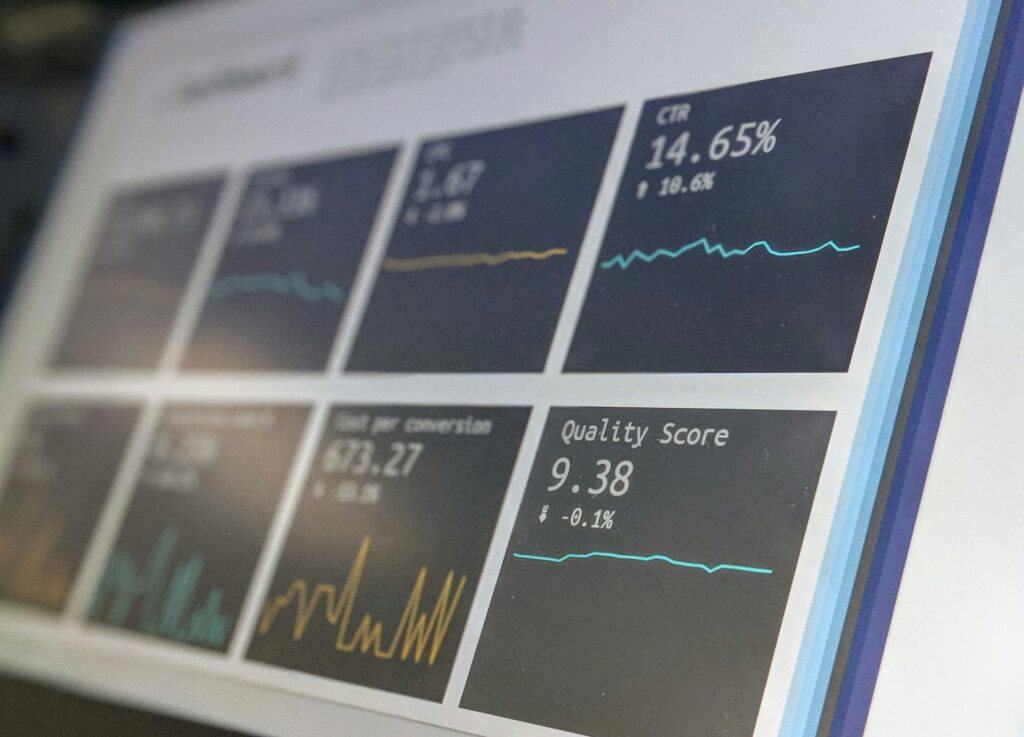
If a dashboard shows that a product is close to running out of stock, purchasing can react. If it shows that a customer has not ordered for six months, sales can contact them. If it shows that a supplier’s prices have increased, management can review the agreement.
Keep Data Connected Across the Business
Data becomes more powerful when it moves through the business without being copied manually.
For example, a customer order should not need to be entered separately by sales, warehouse, finance, and production. It should become one connected process. Sales enters the order. The system checks stock. The warehouse receives a picking task. Purchasing or production sees what is needed. Finance can prepare the invoice.
This is called data integration.
Integration can happen inside one ERP system or between different systems through secure connections, often called APIs. An online shop can send orders to the ERP. A barcode scanner can update warehouse stock. A delivery service can return shipment status. A banking connection can support payment matching.
The important principle is simple: information should move automatically where possible, but it should remain controlled and traceable.
Before connecting systems, a company should first decide which system owns which data. For example, the ERP may be the official source for customers, products, prices, stock, and invoices. A marketing platform may manage campaign activity, but it should use the correct customer information from the central system.
Without these rules, integrations can create more confusion instead of less.
Create Clear Ownership and Rules
Every important type of data needs an owner.
This does not mean one person must enter every record. It means someone must be responsible for the quality and rules around that data. Sales may own customer and opportunity information. Purchasing may own supplier data. Warehouse teams may own stock locations and stock movements. Finance may own chart-of-account settings and payment terms. HR may own employee data.
These responsibilities form the basis of data governance.
Data governance sounds technical, but it is really about practical rules. Who may create a new customer? Who may change product prices? How are duplicates handled? Which fields are required? How long should documents be kept? Who approves changes to sensitive information?
When these rules are clear, the company has fewer arguments, fewer errors, and better reporting.
Protect Data Without Making Work Impossible
Business data must be available to the people who need it, but it must also be protected.
A good data management system uses role-based access. This means that users have individual accounts and can access only the information needed for their job. A warehouse employee may manage stock movements but should not see salary information. A salesperson may see customers and offers but should not be able to change financial settings. A manager may view reports but not edit every record.
Strong passwords, multi-factor authentication, encrypted connections, reliable backups, and activity logs are all important. They help protect the company against unauthorised access, accidental deletion, and cyber threats.
Security is not only about technology. Employees also need to understand why they should not share accounts, send sensitive files through unsafe channels, or keep customer data in personal folders.
Security and usability must work together. If a system is too difficult to use, people find unsafe ways around it. If it is too open, the business takes unnecessary risks.
Understand the Role of Databases, Warehouses, and Data Lakes
Businesses often hear terms such as databases, data warehouses, and data lakes. These tools have different jobs.
A business database is normally used for daily operations. It stores live information such as customers, orders, products, invoices, and stock movements. An ERP system usually works with this type of structured business data.
A data warehouse is designed mainly for reporting and historical analysis. It combines information from one or more systems, allowing management to review performance over time without slowing down the main operational system.
A data lake is usually a larger storage environment for raw information from many sources. It may contain files, machine data, documents, website activity, sensor information, images, or large datasets used for analysis and AI projects.
Most SMEs do not need to start with a large data lake. They first need clean customer data, controlled product data, connected business processes, and useful reports. A strong ERP and Business Intelligence setup is often the most practical starting point.
Use Reporting to Ask Better Questions
Reports should help people make decisions, not just produce more numbers.
A sales manager may want to know which opportunities are most likely to close this month. A warehouse manager may need to see which items are below their reorder level. A purchasing manager may want to compare supplier delivery performance. A CEO may need to understand revenue, costs, cash flow, and profitability by business area.
The quality of the answer always depends on the quality of the data.
This is why a business should regularly review its reports. If people do not trust a report, the first question should not be, “Can we make a new report?” It should be, “Is the source data correct, complete, and consistently entered?”
When the source data is reliable, reports become a powerful tool for daily management.
Build a Practical Data Strategy
A data strategy does not need to be a large document full of technical language. It should explain how the company will use information to run better.
A practical strategy starts by identifying the business areas that need clearer data. The company then defines which information is important, where it will be stored, who owns it, who can access it, and how quality will be checked.
It should also define how the company handles backups, security incidents, data retention, integrations, and reporting. As the business grows, the strategy can expand to include more advanced analytics, forecasting, automation, and AI-supported tools.
The best approach is to improve step by step. Start with one important process, such as customer management, warehouse stock, purchasing, or sales reporting. Make the data reliable. Connect it to the right people and process. Then build on that success.
Final Thoughts
Data management is not about collecting every possible piece of information. It is about making sure the information your business depends on is correct, protected, connected, and useful.
When a company manages data well, employees spend less time searching, checking, copying, and correcting. Managers receive better reports. Customers receive faster answers. The business can spot risks earlier and make decisions with more confidence.
SIX ERP helps businesses manage their customer, sales, warehouse, purchasing, production, finance, HR, and operational data in one connected system. It turns daily transactions into reliable business information — so the company can act on facts, not guesswork.