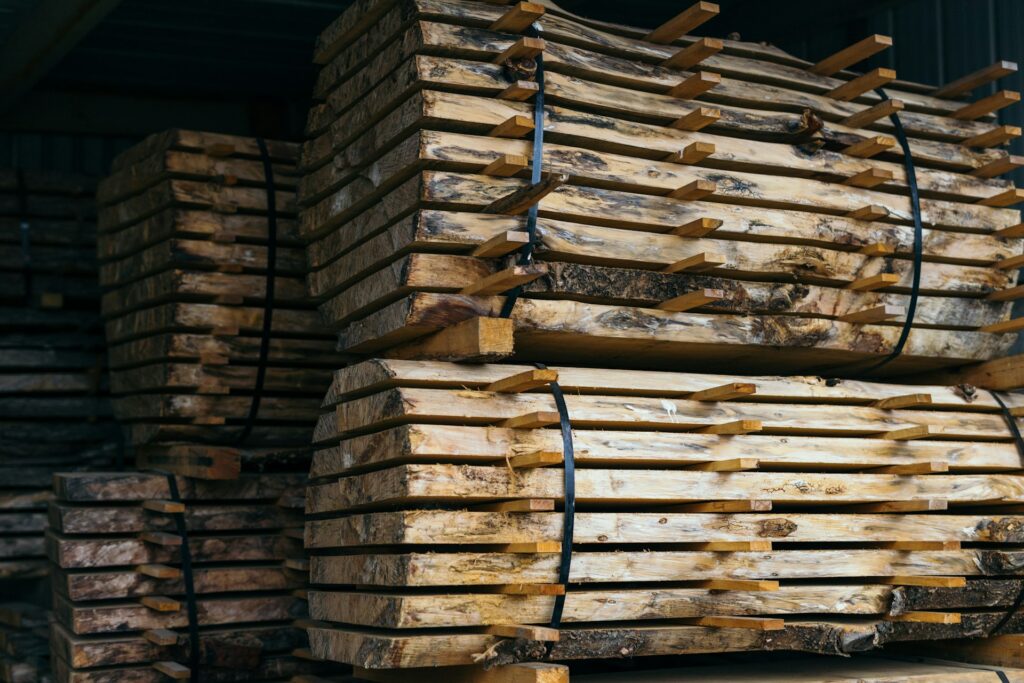
Why wood-based product data, supplier evidence, and traceable production records are becoming essential for companies selling into the EU market.
“A timber declaration is no longer enough when your customer, authority, or supply chain needs to know exactly where the material came from and how it became the finished product.”
Furniture manufacturers, timber traders, importers, distributors, and wood-product companies are entering a new compliance era.
The EU Deforestation Regulation—commonly called EUDR—creates new due-diligence and traceability expectations for commodities and products linked to deforestation and forest degradation.
For large and medium operators, the Regulation begins to apply from 30 December 2026. Most micro and small operators have until 30 June 2027. Micro and small operators already covered by the former EU Timber Regulation must also comply from 30 December 2026. European Commission: EUDR overview
For furniture companies, the impact can be significant.
Wood, plywood, veneer, particleboard, MDF, paper, cardboard, timber components, and other wood-derived materials may form part of a complex supply chain. A finished cabinet, chair, bed, table, door, or mattress frame may contain materials from several countries, suppliers, production batches, and processing stages.
This means EUDR is not only a purchasing requirement.
It is a traceability requirement that reaches into sourcing, product design, warehousing, manufacturing, sales, logistics, and compliance.
What Is EUDR?
EUDR is the EU Regulation on deforestation-free products.
Its goal is to reduce the EU market’s contribution to global deforestation and forest degradation. It covers certain commodities and relevant products placed on the EU market, made available on the EU market, or exported from the EU.
The commodities covered by EUDR are:
- Cattle.
- Cocoa.
- Coffee.
- Oil palm.
- Rubber.
- Soya.
- Wood.
For furniture and wood-product businesses, wood is the central commodity. However, companies should not assume only raw timber is relevant. The Regulation also covers many derived products listed in its annex, which can include different wood-based products and categories.
The exact scope depends on the product’s customs classification and the Regulation’s annexes. Companies should therefore verify the specific product codes and commercial activities that apply to them.
What EUDR Requires
For relevant products, EUDR is built around three core expectations.
The product must be:
- Deforestation-free.
- Produced in accordance with the relevant laws of the country of production.
- Covered by due diligence before it is placed on the EU market or exported, where the company’s role requires it.
The due-diligence process is designed to help companies show that the product has not been produced on land subject to deforestation after the Regulation’s cut-off date of 31 December 2020.
This is not a simple supplier declaration exercise.
Companies may need to collect, assess, and retain information about the supply chain, including product description, quantity, country of production, supplier details, and geolocation data for the relevant production areas.
The question is no longer only, “Who sold us the wood?” It is also, “Can we demonstrate where the wood originated and whether it meets the applicable due-diligence requirements?”
Why Furniture Companies Need to Prepare Now
Furniture manufacturing often uses materials from complex, multi-level supply chains.
A single product may contain:
- Solid wood.
- Veneer.
- Plywood.
- MDF.
- Particleboard.
- Timber frames.
- Wooden legs.
- Drawers.
- Doors.
- Paper or cardboard packaging.
- Timber-based accessories.
- Recycled wood materials.
- Imported components.
The manufacturer may buy some materials directly from a timber supplier, but others may arrive through board suppliers, furniture-component suppliers, subcontractors, or distributors.
This creates a traceability challenge.
A business may know which supplier delivered an MDF board. But can it connect that board to the finished product? Can it identify which batch was used in which production order? Can it retain the supporting supplier evidence? Can it show which customer orders received the resulting products?
If the answer is no, the company may struggle when a customer, importer, retailer, or authority requests supporting information.
EUDR readiness depends on the ability to connect source material to finished goods.
EUDR Is Not Only for Large Timber Importers
A common misunderstanding is that EUDR only affects companies importing raw timber from outside the EU.
That is too limited.
The Regulation can affect companies that:
- Import relevant wood products into the EU.
- Place relevant products on the EU market.
- Export relevant products from the EU.
- Manufacture furniture using relevant timber-based materials.
- Trade or distribute products within the EU.
- Source wood-based components from other companies.
- Supply retailers, contractors, or manufacturers that need EUDR evidence.
- Sell products to customers that require supply-chain transparency.
The legal responsibility differs depending on whether the company is an operator, trader, importer, manufacturer, exporter, downstream operator, or small business. The revised EUDR framework includes simplified responsibilities for some downstream operators and traders.
However, even where a company is not responsible for submitting its own due-diligence statement, it may still need to collect, retain, and pass on relevant evidence.
In practice, the market will ask for traceability before the law reaches every company directly.
The Difference Between a Declaration and Evidence
Many businesses already collect supplier declarations, FSC or PEFC certificates, country-of-origin statements, and product specifications.
These remain useful. But they may not be sufficient by themselves for EUDR purposes.
A declaration may say that timber is responsibly sourced. A certificate may show that a supplier participates in a recognised certification scheme. But EUDR due diligence focuses on verifiable information connected to the product and supply chain.
For relevant products, companies may need to manage evidence such as:
- Supplier identity.
- Product description.
- Quantity.
- Country of production.
- Geolocation information for the relevant production area.
- Supporting legality information.
- Due-diligence reference numbers where relevant.
- Customs and transport documents.
- Invoices and purchase orders.
- Batch, lot, or production references.
- Risk-assessment records.
- Supplier risk information.
- Mitigation actions where risks cannot be considered negligible.
The evidence must support the claim. It cannot simply repeat the claim.
The Product Data Chain: From Forest to Finished Furniture
The strongest way to understand EUDR is to follow the product journey.
Step One: Supplier and Source Information
The traceability chain begins with the supplier.
The company needs to know who supplied the timber, board, veneer, or component. It should hold clear supplier records, product specifications, origin information, and supporting compliance documents.
For direct sourcing, this may include more detailed source and geolocation information. For downstream purchasing, the company may need to retain references, declarations, due-diligence information, and supplier evidence relevant to its role.
Step Two: Incoming Material Traceability
When materials arrive, the warehouse should record what arrived, from whom, in what quantity, and under which batch, lot, or delivery reference.
This is where a good ERP or warehouse system becomes important.
If incoming timber or board materials are mixed without a traceable record, the business may lose the link between the source material and the finished product.
Step Three: Production-Order Traceability
During production, materials should be connected to work orders, production batches, or manufacturing orders.
For example, a furniture manufacturer should be able to show:
- Which boards were used for a cabinet batch.
- Which veneer was used for a table range.
- Which timber supplier supplied the material.
- Which production order created the finished product.
- Which quality or production records apply.
- Which delivery or customer order received the finished item.
Step Four: Finished Product and Delivery Records
Once the product is complete, the company should retain a reliable link between the finished product, its material inputs, production record, and delivery history.
This supports customer requests, retailer requirements, warranty questions, audit evidence, and future Digital Product Passport initiatives.
Traceability is not about storing more documents. It is about maintaining the relationship between them.
EUDR and Digital Product Passports
EUDR and Digital Product Passports are separate legal frameworks, but they are closely connected in practice.
EUDR focuses on deforestation-free and legally produced commodities and products. A Digital Product Passport focuses on wider product information, including sustainability, repairability, materials, lifecycle, and circularity data.
For furniture manufacturers, both depend on the same foundation:
- Reliable product master data.
- Bills of Materials.
- Supplier records.
- Material traceability.
- Production history.
- Quality documentation.
- Warehouse and logistics information.
- Customer-delivery records.
- Audit trails.
Companies that build EUDR traceability now are also creating the foundation for future furniture Digital Product Passports.
The European Commission’s current DPP work plan identifies furniture as a priority product group for future product-specific measures, with work planned around 2028. European Commission: Digital Product Passport
How EUDR Changes Purchasing
EUDR changes the role of purchasing teams.
Purchasing can no longer focus only on price, quality, lead time, and supplier availability. It must also consider traceability, documentation quality, origin information, and supplier readiness.
A strong EUDR-ready supplier process should include:
- Supplier onboarding checks.
- Product and material classification.
- Country-of-production information.
- Evidence collection and retention.
- Due-diligence references where applicable.
- Supplier declarations.
- Contract clauses for information sharing.
- Change-notification procedures.
- Risk assessment.
- Escalation rules for incomplete or inconsistent data.
- Approved supplier lists.
- Regular supplier performance reviews.
If a supplier changes the source of timber, board material, veneer, or component without notice, the buyer may not be able to maintain the required evidence.
Supplier change control becomes a compliance control.
How EUDR Changes Warehouse and Production Processes
The warehouse is a critical point in the EUDR data chain.
A company must avoid situations where materials are received, moved, mixed, consumed, or substituted without a record of what happened.
Relevant processes may include:
- Batch and lot identification.
- Barcode or QR-code scanning.
- Material receipt records.
- Quarantine procedures for incomplete documentation.
- Supplier-document attachment.
- Controlled material substitution.
- Production-order issue and consumption tracking.
- Finished-goods labelling.
- Delivery and shipment traceability.
- Return and recall management.
The same applies to production.
If a planner substitutes a board, veneer, or timber component because the original material is unavailable, the business should record the decision and confirm that the substitute is approved.
A material substitute may solve a production problem but create a compliance problem if it is not traceable.
A Practical EUDR Readiness Roadmap
First: Determine Your Scope
Start by identifying the relevant products, materials, and commercial activities.
Ask:
- Do we use wood or wood-derived materials?
- Do we import, manufacture, trade, or export relevant products?
- Which customs codes apply to our materials and finished products?
- Are we an operator, trader, downstream operator, importer, exporter, or a combination?
- Which customers will require EUDR evidence?
- Which suppliers are able to provide the necessary data?
Because scope depends on product classification and the company’s role, confirm the legal interpretation with qualified legal or customs advisers where needed.
Second: Map the Supply Chain
Choose one product family and map the material flow_ from supplier to finished product.
For example:
Timber supplier → board supplier → warehouse receipt → production batch → finished cabinet → customer delivery.
Then identify where information is missing, unclear, or manual.
Third: Clean Supplier and Material Master Data
Ensure each relevant supplier and material has a controlled record.
Include supplier details, material category, country information, certificates, delivery references, compliance documents, and approved alternatives.
Fourth: Create Traceability at the Right Level
Not every item needs the same level of tracking.
Focus first on the materials and products that carry the highest EUDR exposure. Use batch, lot, serial, or delivery-level traceability where it provides a reliable and practical audit trail.
Fifth: Build Document and Evidence Controls
Store and link key documents to suppliers, materials, purchase orders, deliveries, batches, and finished products.
This may include invoices, transport records, declarations, certificates, contracts, due-diligence references, and risk-assessment records.
Sixth: Test a Real Traceability Question
Choose one finished product and ask:
- Which wood-based material was used?
- Which supplier delivered it?
- Which batch or delivery did it come from?
- Which production order consumed it?
- Which finished units contain it?
- Which customers received those units?
- Can we retrieve the supporting evidence quickly?
If the answer requires several days of manual searching, the process is not ready.
How SIX ERP Supports EUDR Readiness
SIX ERP can support the operational data foundation required for EUDR traceability.
The platform can connect:
- Supplier master data.
- Purchase orders and supplier deliveries.
- Material certificates and compliance documents.
- Product and material classifications.
- Bills of Materials.
- Batch, lot, and serial-number tracking.
- Warehouse receipts and internal movements.
- Manufacturing orders and production consumption.
- Quality inspections.
- Finished-goods records.
- Sales orders and customer deliveries.
- Returns, claims, and recall processes.
- User approvals and change history.
- Dashboards for supplier, material, and traceability risk.
The purpose is not to replace legal assessment. The purpose is to ensure that the business has a reliable operational record of what it bought, used, produced, and delivered.
That record is essential when the company needs to support a due-diligence process, answer a customer request, respond to an audit, or prepare for a future Digital Product Passport.
What Happens If You Wait?
Late preparation creates predictable problems:
- Suppliers are unable to provide complete information quickly.
- Product and material records are inconsistent.
- Warehouse teams cannot identify relevant batches.
- Production substitutions are not recorded.
- The company cannot connect incoming materials to finished goods.
- Customer requests become manual research projects.
- Sales teams hesitate to promise export deliveries.
- Compliance teams work outside the ERP in spreadsheets.
- Management loses confidence in traceability data.
The biggest risk is not receiving one difficult question. It is discovering that the company cannot answer it.
EUDR Readiness Is a Business Advantage
EUDR is a legal requirement, but the companies that prepare well gain wider benefits.
They improve supplier control. They reduce traceability gaps. They strengthen product data. They prepare for Digital Product Passports. They support credible sustainability claims. They improve recall readiness. They build confidence with retailers, export partners, and customers.
For furniture manufacturers, this matters especially because the market is moving toward greater transparency around materials, origin, durability, repairability, and circularity.
The businesses that can prove their product story will be easier to trust.
Start With One Product Family
Do not begin by trying to solve EUDR for every material and product at once.
Start with one important product family. Map the wood-based materials. Review the supplier evidence. Connect warehouse receipts to production orders. Connect production orders to finished goods and deliveries.
Then repeat the model.
By the time EUDR applies from 30 December 2026 for large and medium operators, your company should not be searching for data. It should be managing it as part of normal operations.
SIX ERP helps companies connect supplier, material, warehouse, production, quality, and customer-delivery data into one traceable business environment.
EUDR readiness starts with a simple question: can you prove the journey of the wood inside your finished product?