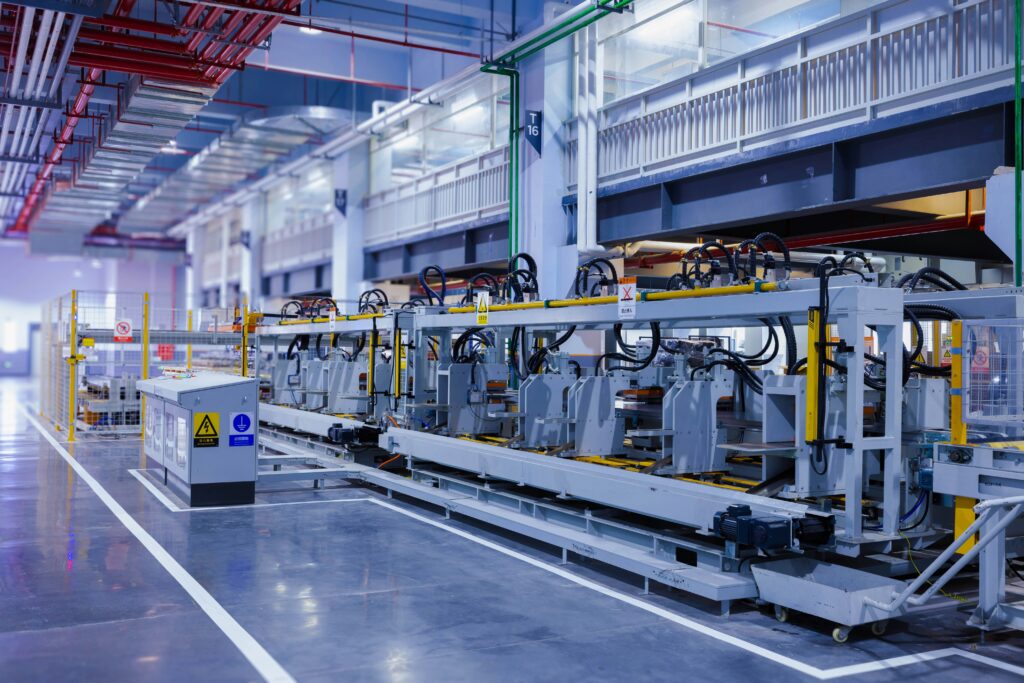
A step-by-step guide to the implementation of Manufacturing Automation
“Automation is no longer only about machines replacing physical work. Software and AI are also changing how companies plan, analyse, and make decisions.”
Manufacturing is a complex business. A company must buy the right materials, keep stock under control, plan production, manage machines and employees, check quality, deliver on time, and still make a profit.
When these activities are managed in separate Excel files, paper documents, and disconnected software, small mistakes quickly become expensive. A missing material can stop a production line. An incorrect stock number can delay a delivery. A late update from the shop floor can make the production plan useless.
This is where ERP becomes important.
ERP means Enterprise Resource Planning. In manufacturing, it is the central system that connects the full process, from customer demand and raw materials to finished products, delivery, invoicing, and analysis.
A good ERP system does not simply store data. It helps the company understand what is happening, what should happen next, and where action is needed.
ERP Connects the Full Manufacturing Process
Manufacturing involves many departments. Sales receives customer orders. Purchasing orders materials. The warehouse receives and stores goods. Production turns materials into finished products. Quality teams check the result. Finance tracks costs and invoices. Logistics prepares delivery.
These teams depend on each other, but they often work with different information. Sales may promise a delivery date without knowing the real production capacity. Purchasing may order materials too late. Production may start a job without knowing that one important component is missing.
ERP connects these departments through one shared system.
When an order is confirmed, the system can check available stock, calculate material requirements, create purchasing suggestions, plan production work, reserve materials, and prepare delivery information. Each department sees the information relevant to its work, while management receives a complete view of the process.
This creates one reliable source of information instead of many disconnected versions of the truth.
Planning Starts With Real Demand
Good manufacturing begins with good planning.
A production manager needs to know what must be produced, how many units are required, when the customer expects delivery, which materials are available, and whether machines and employees have enough capacity.
An ERP system brings this information together. It can use confirmed sales orders, forecasts, current stock, open purchase orders, production lead times, and available capacity to support planning.
For example, if a customer orders 500 units of a product, the ERP can check the bill of materials. A bill of materials lists every part, component, and raw material needed to make that product. The system can then show whether the required materials are in stock or whether they must be purchased.
This helps companies avoid last-minute surprises. Instead of discovering a missing component on the day production should begin, the business can identify the problem earlier and take action.
Scheduling Makes Production More Realistic
Planning answers the question, “What do we need to produce?” Scheduling answers, “When and where can we produce it?”
A factory has limited resources. Machines have available hours. Employees have shifts. Some production steps must happen in a certain order. Materials may arrive on different dates. Some work centers may already be busy.
An ERP helps build a realistic production schedule based on these limits. It can show which orders are urgent, where capacity is available, and where bottlenecks may appear.
A bottleneck is a part of the process that slows down everything behind it. It may be one machine, one production line, one missing material, or one department that cannot keep up with demand.
When managers can see bottlenecks early, they can make better decisions. They may move work to another machine, adjust the schedule, order materials sooner, add a shift, or speak honestly with the customer before a delay becomes unavoidable.
ERP Supports Both Discrete and Process Manufacturing
Different manufacturers produce in different ways.
Discrete manufacturing means making separate items or assemblies. Furniture, machinery, vehicles, electronics, and many technical products are common examples. Each finished product can usually be counted as one unit and may have serial numbers, components, and assembly steps.
Process manufacturing means combining materials through formulas, recipes, or chemical and physical processes. Food and beverage, chemicals, pharmaceuticals, paint, and cosmetics are common examples. These industries often work with batches, lots, expiry dates, yield, and strict quality rules.
A manufacturing ERP should support the real production method of the business. It should not force a food producer to work like a furniture factory, or a furniture manufacturer to work like a chemical plant.
The system must reflect how materials move, how work is completed, how quality is checked, and how costs are calculated.
Execution Turns the Plan Into Real Work
A production plan is useful only when it can be carried out on the shop floor.
ERP helps turn the plan into clear production orders. These orders can tell employees what to make, how much to make, which materials to use, which work centre to use, and when the work should be completed.
As work progresses, employees can record important information in the system. This may include the start and finish time, quantities produced, materials used, scrap, waste, quality results, machine time, and reasons for delays.
This gives the company a more accurate view of reality. If production is behind schedule, the system should show it. If too much material is being wasted, management should be able to investigate. If a specific product or machine creates repeated problems, the data should help reveal the pattern.
The aim is not to monitor people unnecessarily. The aim is to understand the process well enough to improve it.
Quality and Traceability Are Part of Production
Quality control should not be treated as something that happens only at the end.
A proper ERP process can include checks when materials arrive, during production, and before goods are delivered. It can record test results, non-conformities, corrective actions, certificates, and approvals.
For many industries, traceability is equally important. A business may need to know exactly which batch of material was used in a finished product, which supplier delivered it, when it was received, and which customer received the final goods.
This is especially important in food, chemicals, pharmaceuticals, automotive, medical devices, and other regulated industries. But traceability also helps any manufacturer respond faster to returns, quality complaints, warranty cases, or supplier issues.
When data is recorded correctly from the start, the company can investigate problems with facts instead of guesswork.
ERP Helps Control Manufacturing Costs
A company can be busy and still make little profit. This is why production data must be connected to financial information.
An ERP can help calculate the cost of a product by combining material costs, labour, machine time, subcontractor costs, transport costs, and production overheads. It can compare planned costs with actual costs and show where the difference comes from.
For example, a product may be profitable on paper but lose money in reality because material prices increased, production took longer than expected, or waste was too high.
When managers understand these details, they can make stronger decisions about pricing, sourcing, process improvement, and product design.
The goal is not only to produce more. The goal is to produce profitably, reliably, and with the right level of quality.
ERP Makes Companies More Flexible
Customer demand changes. Suppliers are late. Material prices rise. Machines need maintenance. Large orders arrive unexpectedly.
Manufacturers need to react quickly, but they cannot react well without reliable information.
ERP helps the business see the impact of a change across the full operation. If a supplier delays a material, the company can see which production orders and customer deliveries may be affected. If demand rises for one product, planners can review stock, capacity, and purchasing needs before making a commitment.
This does not remove every problem. It gives the company time and information to handle problems in a more controlled way.
Modern ERP systems can also support automation, barcode scanning, mobile warehouse work, machine data connections, and AI-supported analysis where these tools create real value. Technology should support practical decisions, not add complexity for its own sake.
Implementing ERP in a Manufacturing Business
An ERP project should begin with the real production process, not with software features.
Before choosing or configuring a system, the company should understand how work currently moves from customer order to final delivery. This includes purchasing, warehouse receiving, material movement, production planning, work orders, quality control, waste, finished-goods storage, shipping, invoicing, and after-sales service.
The business should identify where it loses time, where errors happen, where information is missing, and where employees depend too much on private Excel files or personal knowledge.
Clear goals are important. One company may need better warehouse control. Another may need accurate bills of materials and production costs. Another may need better planning across several factories or work centers.
A successful implementation also needs the right people involved. Production managers, warehouse employees, purchasing teams, finance, sales, and management all understand different parts of the process. Their knowledge is necessary to build a system that works in real life.
Training is equally important. Employees do not need to understand every function of the ERP, but they must understand how to use the parts that affect their daily work. The system only becomes valuable when people use it correctly and consistently.
Choosing the Right Manufacturing ERP
The right ERP should fit the manufacturing process today and support the company as it grows.
It should connect production with sales, purchasing, warehouse, finance, quality, and logistics. It should handle bills of materials, routings, work orders, material requirements, stock movements, capacity planning, and cost tracking in a clear way.
It should also be flexible enough to support company-specific workflows without becoming difficult to maintain. A system with many impressive features is not automatically the right system. The best choice is the one that helps employees complete real work more accurately and gives management trustworthy information.
The company should also look at the full long-term cost. This includes implementation, training, support, integrations, updates, internal project time, and future growth — not only the first licence price.
Final Thoughts
ERP gives manufacturers a connected view of their operation. It links customer demand, materials, production, quality, warehouse activities, delivery, and finance into one controlled process.
This helps businesses plan better, reduce waste, improve traceability, respond faster to changes, understand real product costs, and serve customers more reliably.
SIX ERP helps manufacturers create a practical connection between the shop floor and the wider business. From raw materials and production orders to warehouse movements, sales, delivery, finance, and Business Intelligence, SIX ERP gives teams the information they need to improve performance every day.