Fully organized purchase management done professionally
“A product can look attractive, expensive, portable, beautiful, and simple. People may talk about its beauty, but they usually buy it because it makes life easier.”
Purchasing is one of the most important business processes — and one of the easiest places to lose money without noticing it.
Every company needs to buy something. This may include raw materials, products for resale, spare parts, packaging, office supplies, machines, external services, software, transport, maintenance, or professional advice.
When purchases are handled through informal phone calls, emails, private spreadsheets, and verbal approvals, the company loses control. People may order the same item from different suppliers, accept unclear prices, miss delivery problems, or approve invoices without checking whether the goods were actually received.
Good purchase management creates a clear process. It helps the company buy what it needs, from the right supplier, at the right time, under the right conditions.
The goal is not to make purchasing slow and bureaucratic. The goal is to make spending visible, controlled, and useful.
Purchase Management Starts Before the Order
A purchase order is not the beginning of the process. Good purchase management begins when someone inside the company identifies a real need.
A warehouse employee may notice that a material is running low. A production manager may need components for an upcoming production order. A service technician may require spare parts for a customer job. An office manager may need equipment for a new employee.
The company should be able to record this need clearly. What is required? How much is needed? When is it needed? Which project, department, customer order, or production order is connected to the request? Is there already stock available? Is there an existing supplier agreement?
This first step is often called a purchase request or purchase requisition. It helps the company separate a genuine business need from an unplanned purchase.
When the request is approved and connected to real demand, purchasing becomes easier to plan and easier to control.
Budget Control Protects the Business
Every purchase affects the company’s money.
Without a clear purchasing process, managers may only discover overspending when an invoice arrives. By then, it is often too late to change the decision.
A connected ERP system can show whether a purchase fits within a budget, whether there are already open orders for the same item, and whether the expected cost will affect a project, department, product margin, or production plan.
This does not mean every small purchase needs a long approval chain. The approval process should be realistic.
A low-value office supply order may need only one approval. A large machinery investment, new supplier agreement, or unusual purchase may require more review from finance, management, or a department head.
The important point is that the approval level should match the risk and value of the purchase.
Good control protects the company without blocking daily work.
Supplier Selection Is About Value, Not Only Price
The cheapest offer is not always the best offer.
A supplier may offer a low unit price but deliver late, provide poor quality, require expensive transport, offer weak payment terms, or create high costs through returns and production delays.
This is why purchasing should compare the full value of an offer. This is often called the Total Cost of Ownership, or TCO.
The company should consider the price, but it should also consider quality, delivery reliability, payment terms, warranty, minimum order quantities, transport costs, lead times, technical support, and the cost of possible defects.
For important or higher-value purchases, it is usually sensible to compare more than one supplier offer. The exact number of offers should depend on company policy, purchase value, urgency, and the availability of suitable suppliers. In some cases, there may only be one approved or technically capable supplier. In others, a competitive comparison can create meaningful savings.
A good ERP purchasing system keeps supplier information, price history, lead times, performance data, documents, and agreements in one place. This helps the company make decisions based on facts rather than memory.
Quotes Make Purchasing More Transparent
A Request for Quotation, or RFQ, is a structured request sent to suppliers asking them to provide an offer.
The business can specify the product or service needed, quantity, quality requirements, requested delivery date, payment conditions, and any technical details. Suppliers can then respond with their prices and terms.
When quotes are stored in the ERP system, the purchasing team can compare them clearly. They can see not only the price but also the proposed delivery date, payment terms, available quantities, transport conditions, and supplier comments.
This creates a transparent decision process. It also helps the company build a history of supplier prices and conditions. Over time, this information can support stronger negotiations and better long-term supplier relationships.
The Purchase Order Creates a Clear Commitment
Once the company chooses a supplier, it creates a Purchase Order, often called a PO.
A purchase order is not just an email asking a supplier to send goods. It is a formal business document that confirms what is being ordered and under which conditions.
It should clearly describe the items or services, agreed quantities, prices, delivery date, delivery address, payment terms, taxes, and any special requirements. It should also refer to the relevant supplier quote, contract, project, customer order, or production plan where necessary.
A clear purchase order protects both sides. The supplier knows what is expected. The company has a documented commitment that can later be checked against delivery and invoice information.
When the purchase order is connected to the ERP, the company can see what has been ordered, what is still expected, what has already been received, and what still needs to be paid.
Receiving Goods Is a Financial Control Step
The purchasing process does not end when the supplier confirms the order.
When goods arrive, the warehouse or responsible employee should check whether the delivery matches the purchase order. Were the correct items delivered? Is the quantity correct? Is the quality acceptable? Are serial numbers, batches, certificates, or expiry dates recorded where needed? Is anything damaged or missing?
This step is important because the company should not pay automatically for goods it has not received or cannot use.
In a connected ERP process, the goods receipt updates warehouse stock and shows that the delivery has arrived. If there is a difference between the purchase order and the actual delivery, the system can record it immediately.
This gives purchasing, warehouse, finance, and management a clearer view of what happened.
Invoice Matching Prevents Expensive Errors
Supplier invoices should be checked against the agreed purchase order and the actual goods receipt.
This is often called three-way matching. The company compares what it ordered, what it received, and what the supplier invoiced.
If all three match, the invoice can move forward for payment. If there is a difference, the company can investigate before money leaves the business.
For example, an invoice may contain a different quantity, a higher price, a delivery charge that was not agreed, or goods that have not yet arrived. Without a connected process, these differences can be easy to miss.
Invoice matching is not only an accounting task. It is an important control that protects the company from overpayment, duplicate payments, and supplier mistakes.
Purchase Management Supports Better Planning
Purchasing is closely connected to sales, warehouse management, production, finance, and logistics.
When the ERP system is connected, a confirmed customer order can show future demand. A production order can create material requirements. Low stock can trigger a purchase suggestion. Open purchase orders can show when goods are expected to arrive.
This helps the company buy more intelligently.
Instead of placing urgent orders because stock suddenly runs out, purchasing teams can plan ahead. Instead of holding too much stock “just in case,” the business can use data to order the right quantity at the right time.
Better planning can reduce emergency transport costs, unnecessary warehouse space, stock shortages, and wasted materials.
Purchase Management Builds Better Supplier Relationships
A purchasing process should not be only about negotiating lower prices.
Reliable suppliers are important business partners. They help companies deliver on time, maintain quality, and respond when problems happen. Strong relationships are built through clear orders, honest communication, predictable payment, and fair treatment.
An ERP system can help manage these relationships by recording supplier performance over time. The company can review delivery reliability, price changes, quality issues, return rates, payment terms, and response times.
This allows the purchasing team to work with suppliers based on evidence. If a supplier performs well, the company can strengthen the relationship. If problems repeat, the company can address them early or look for alternatives.
Implementation of the Purchase Management Process
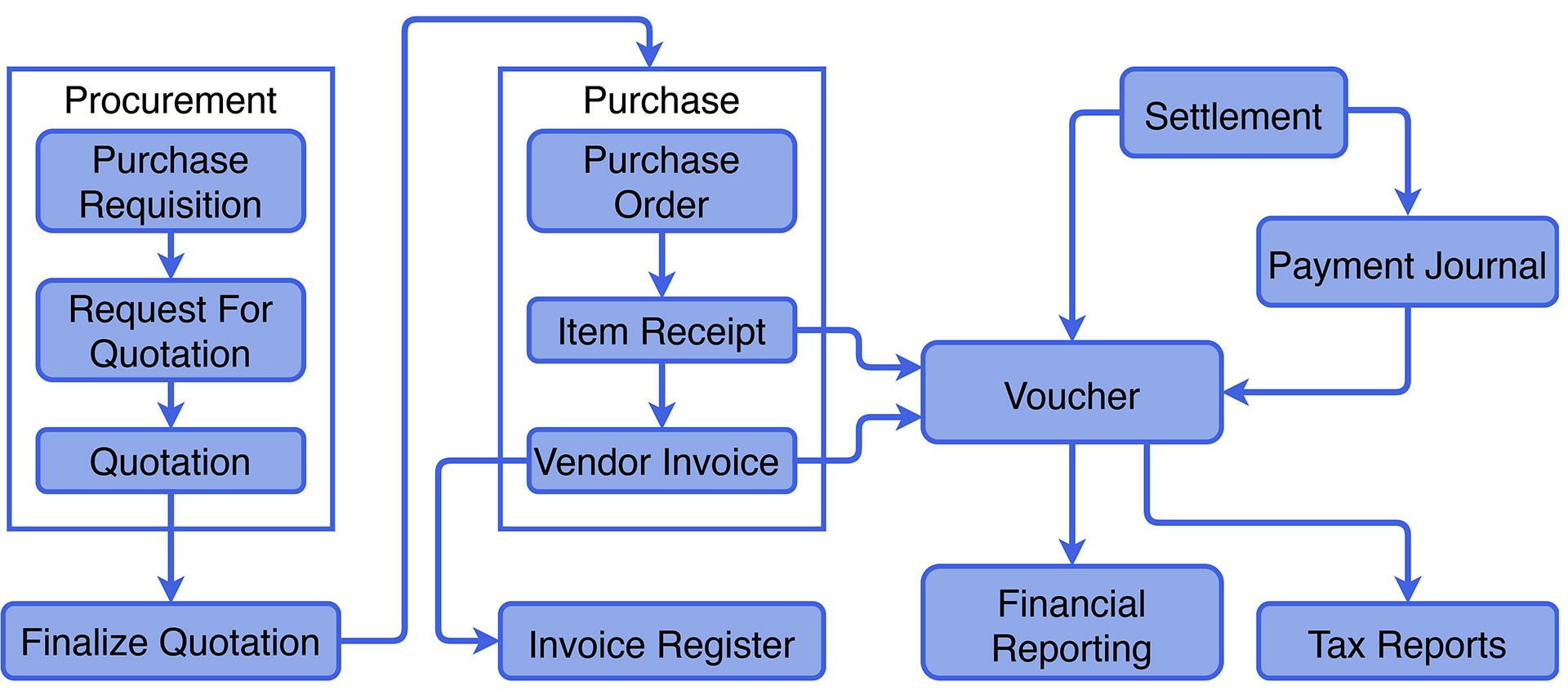
Few organizations operate without a purchasing or procurement department. In many cases, this department is responsible for acquiring the goods and services needed to keep the organization running. The purchasing process typically includes the following steps:
- Planning and requisitioning: This step involves identifying the goods or services needed, estimating the quantity required, and developing specifications.
- Supplier selection: Once the requirements have been identified, potential suppliers are evaluated and selected based on criteria such as price, quality, delivery time, and ability to meet other specifications.
- Purchase Request: Identify who needs what and when (PR)
- Request for Quotes: Ask Vendors for prices and receive Quotes (RFQ)
- Quote vetting: Compare Quotes and pick the one that offers the best value for money.
- Purchase Order: The selected supplier is contacted, and an order is placed. Depending on the agreement between buyer and seller, the delivery may occur immediately or at a later date (PO)
- Receiving and inspection: Upon receipt of the goods or services ordered, goods are inspected to ensure that they meet the quality standards specified in the purchase order.
- Payment: The supplier is paid for the goods or services received according to the terms of the purchase agreement.
Purchase Management in SIX ERP
SIX ERP connects purchasing with the wider business process.
A purchase request can be linked to a department need, customer order, warehouse requirement, project, or production plan. Supplier quotes can be compared in one system. Purchase orders can be approved, sent, tracked, and matched with received goods and supplier invoices.
Warehouse teams can confirm deliveries. Finance teams can review invoices against orders and receipts. Management can see spending, supplier performance, open commitments, expected deliveries, and purchasing trends.
This creates a clear path from business need to final payment.
Final Thoughts
Good purchase management is not about adding unnecessary controls. It is about helping the company spend money with more confidence.
A structured process makes it easier to plan purchases, compare suppliers, control budgets, receive goods accurately, check invoices, and build reliable supplier relationships.
When purchasing is connected to sales, warehouse, production, finance, and reporting, the company gains more than an order process. It gains visibility over one of the most important parts of its business.
SIX ERP helps companies manage purchasing from the first request to supplier payment — with clearer workflows, better data, and less manual work.