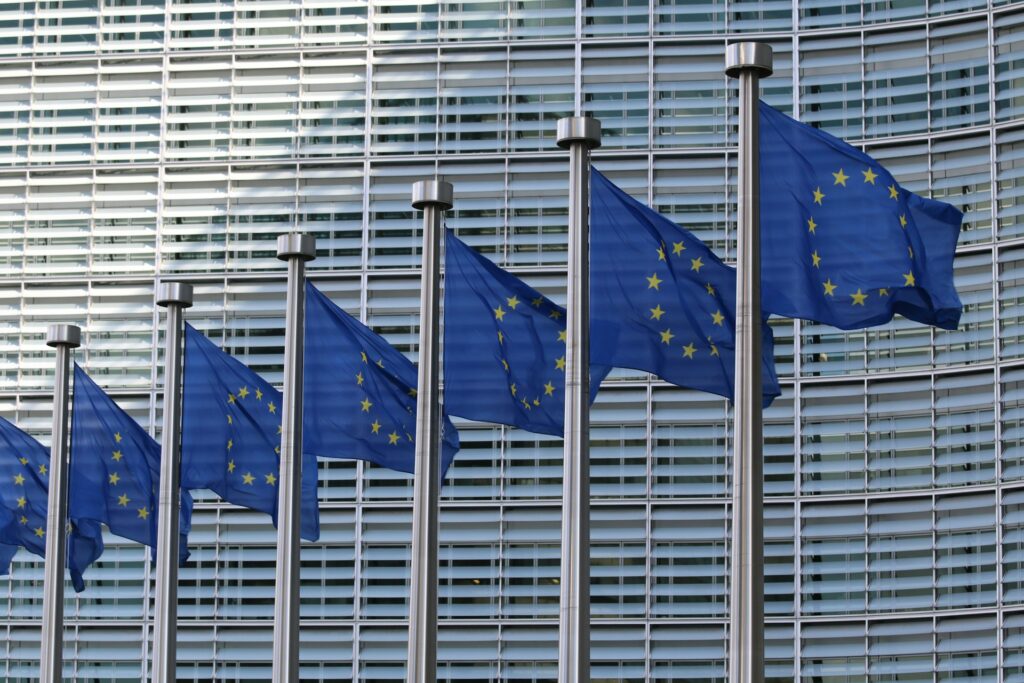
SAF-T, e-invoicing, and EU digital reporting are changing how companies create, validate, and exchange financial data.
“The future of compliance is not better-looking paperwork. It is cleaner, structured, traceable business data.”
For many years, a business invoice could be a PDF that looked correct to a person. As long as the totals, VAT amount, and customer name appeared reasonable, the document could move through email, accounting, and payment processes with limited automated validation.
That model is changing across Europe.
Governments, customers, auditors, and business systems are increasingly moving toward structured electronic data. This means invoice and accounting information must be readable by software, validated automatically, and connected to the wider transaction chain: order, delivery, invoice, payment, VAT treatment, and accounting entry.
A PDF can still be useful as a visual document. But in a structured e-invoicing environment, a PDF alone is usually not enough. It does not provide the machine-readable data that systems need to validate, process, reconcile, and report transactions automatically.
This is not only a tax topic. It is an operational topic.
A missing VAT ID, incorrect tax code, inconsistent customer record, duplicate invoice number, or unclear delivery reference can now trigger a rejection, payment delay, reporting problem, or audit risk much earlier in the process.
Europe is moving from paperwork that looks correct to data that must be correct.
Bulgaria: SAF-T Is Now a Real Compliance Requirement
Bulgaria’s most important current digital tax development is SAF-T—the Standard Audit File for Tax.
SAF-T is not an invoice format. It is a standardized electronic file that contains accounting, tax, master-data, and transaction information in a structured format. It gives the National Revenue Agency (NRA) a more consistent way to review tax and accounting data.
Bulgaria’s SAF-T framework is now active. The NRA has published the official structure, filing requirements, and updated technical materials. The current SAF-T XML schema version 1.0.2 applies from 1 April 2026, following an NRA order issued on 27 February 2026. NRA SAF-T information page
SAF-T reporting is being introduced in stages. The exact obligation depends on the legal scope, reporting period, and whether the company has received an NRA notification or falls within a defined category. Businesses should therefore confirm their individual filing position with their accountant, tax adviser, or the NRA.
What matters for every company is this: SAF-T readiness is no longer a future IT project. It is a data-quality and process-control requirement.
Your ERP and accounting environment must be able to produce consistent information on:
- Customers, suppliers, and tax registrations.
- VAT codes and VAT treatment.
- Chart-of-account mappings.
- Sales and purchase invoices.
- Payments and adjustments.
- Inventory and fixed assets where required.
- Document numbering and references.
- Audit trails and correction history.
- Links between business transactions and accounting entries.
A company may be able to print a correct invoice while still having inconsistent underlying data. SAF-T exposes this gap.
E-Invoicing in Bulgaria: Already Relevant for Public Procurement
Bulgaria does not currently have a general domestic B2B e-invoicing mandate for every private-sector business. However, structured e-invoicing is already relevant in public procurement.
Under Article 115a of Bulgaria’s Public Procurement Act, contracting authorities must accept and process electronic invoices for public-procurement contracts when they meet the applicable requirements. The provision has applied since 1 November 2019. Public Procurement Act, Article 115a
This follows the European direction established by the EU e-invoicing standard, EN 16931, which defines a common semantic data model for electronic invoices in public procurement.
The practical lesson is important:
An electronic invoice is not simply a PDF sent by email. In a true e-invoicing environment, invoice information is exchanged as structured, machine-readable data that the receiving system can process automatically.
Even if your business does not work with public authorities today, preparing for structured documents now makes future requirements far easier to manage.
Why Structured Data Changes Daily Operations
Structured reporting and e-invoicing do not only affect the finance department. They affect the entire order-to-cash and procure-to-pay process.
A well-connected business process should link:
- Customer or supplier master data.
- Sales order or purchase order.
- Delivery or goods receipt.
- Invoice or credit note.
- VAT treatment.
- Payment and reconciliation.
- Accounting entry.
- Supporting documents and approval history.
When these elements are connected, the business can identify errors early. If an invoice total does not match the purchase order, the system can flag it. If a VAT rate is incorrect, the problem can be resolved before filing. If a supplier invoice is duplicated, the business can stop the second payment.
Structured compliance turns data quality into an everyday business discipline.
European E-Invoicing: Why Bulgarian Companies Must Pay Attention
A Bulgarian company may not yet face a broad domestic B2B e-invoicing mandate. But if it trades internationally, has a foreign branch, holds foreign VAT registrations, or sells to customers in countries with domestic mandates, the change is already practical.
Your invoice is part of your customer’s compliance process.
If a Belgian, French, German, or Polish customer must receive and process structured electronic invoices, your company needs the systems and data quality to support that relationship.
Belgium: Structured Domestic B2B E-Invoices Since 1 January 2026
Belgium introduced mandatory structured e-invoicing for domestic B2B transactions on 1 January 2026.
Belgian VAT-liable businesses must use structured electronic invoices in transactions with one another. Sending a PDF invoice by email is not sufficient as the sole compliant format for in-scope transactions. European Commission: eInvoicing in Belgium
For Bulgarian businesses, this matters when they have a Belgian establishment, participate in domestic Belgian transactions, or need to connect operationally with Belgian entities.
Germany: Receiving Has Been Required Since 1 January 2025
Germany began its domestic B2B e-invoicing transition on 1 January 2025.
Since that date, businesses in scope must be able to receive structured e-invoices. The issuing obligation is phased:
- From 1 January 2027, businesses with prior-year turnover above €800,000 must generally issue compliant structured e-invoices for in-scope domestic B2B transactions.
- From 1 January 2028, the broader domestic B2B issuing requirement applies.
During the transition period, some paper and non-structured electronic invoice formats may still be used under specific conditions. However, companies should not confuse this transitional relief with long-term readiness. The operational requirement to receive and process structured invoices already exists.
France: Major Changes Begin on 1 September 2026
France begins its phased e-invoicing reform on 1 September 2026.
From that date:
- Large enterprises and intermediate-sized enterprises must begin issuing e-invoices.
- All businesses in scope must be able to receive e-invoices.
- Small and medium-sized businesses, as well as micro-enterprises, begin issuing e-invoices from 1 September 2027.
France also requires businesses to use an approved platform directly or a compatible solution for invoice exchange and reporting. French government guidance
Poland: KSeF Is Being Introduced in 2026
Poland began mandatory e-invoicing through its national KSeF platform in 2026.
The first phase started on 1 February 2026 for the largest taxpayers. The next phase began on 1 April 2026 for most other businesses, while certain smaller taxpayers have a later implementation date. European Commission: eInvoicing in Poland
The details depend on company size, transaction type, and local VAT position. But the overall message is clear: Poland is moving invoice exchange into a structured national system.
The EU Direction: ViDA and Cross-Border Digital Reporting
At EU level, the most important long-term framework is the VAT in the Digital Age (ViDA) package.
ViDA was adopted on 11 March 2025 and published in the Official Journal on 25 March 2025. It creates a phased path toward more standardised digital VAT reporting across the European Union. European Commission: ViDA
The key dates are:
| Date | What it means |
|---|---|
| 14 April 2025 | ViDA entered into force. Member States may introduce mandatory e-invoicing under defined conditions. |
| 1 July 2030 | EU digital reporting requirements begin for cross-border B2B transactions, based on e-invoicing. |
| 1 January 2035 | Member States with domestic real-time digital transaction-reporting systems must align them with the EU model and standards. |
The shift is significant. The EU is moving toward a model where cross-border VAT reporting is more digital, faster, and less dependent on manual reconciliation after the transaction has already happened.
By 2030, structured e-invoicing and digital reporting will be central to cross-border B2B trade in the EU.
What Your Business Must Have
The foundation is not complex, but it must be reliable.
Your company needs:
- Clean master data for customers, suppliers, products, tax numbers, addresses, and payment terms.
- Correct VAT logic for domestic, intra-EU, export, reverse-charge, exempt, and special transactions.
- Consistent document numbering and clear credit-note or correction procedures.
- Traceable approvals for invoices, purchase orders, payments, and changes.
- Reliable links between documents, including order, delivery, invoice, payment, and accounting entry.
- Structured export capability for SAF-T, e-invoicing formats, and future reporting requirements.
- Secure document archiving with clear retention rules and accessible audit evidence.
- Exception handling for rejected invoices, mismatches, missing references, incorrect tax treatment, and payment differences.
These are not optional “nice system features.” They are the operational controls that make compliance possible.
What Your Business Should Have
Once the foundation is in place, companies should focus on speed and control.
A strong finance and ERP environment should provide:
- Clear invoice statuses, from draft through approval, sending, receipt, payment, and reconciliation.
- Automatic matching between purchase orders, goods receipts, and supplier invoices.
- Alerts for duplicate invoices, unusual VAT treatment, changed supplier bank details, or unexpected price differences.
- Centralised customer and supplier communication.
- Role-based permissions and approval thresholds.
- Dashboards for unpaid invoices, blocked documents, reporting deadlines, and cash-flow exposure.
- Easy correction and re-submission workflows when a partner or platform rejects a document.
This prevents every exception from becoming an email chain, spreadsheet task, or finance emergency.
What Creates a Competitive Advantage
The strongest companies will not treat compliance as a burden. They will use it to improve operations.
When finance data is structured, connected, and current, management gains better visibility into:
- Which invoices are delayed and why.
- Which customers regularly pay late.
- Which suppliers create the most exceptions.
- Where VAT or pricing issues appear most often.
- Which products have unusual margin changes.
- Where approvals slow down the business.
- Which transactions need attention before month-end.
Compliance-ready data is also management-ready data.
A company that can identify an invoice issue before it delays payment has an advantage. A company that can trace a transaction from purchase order to accounting entry has an advantage. A company that can send a structured invoice correctly the first time has an advantage.
A Practical Readiness Plan
Start with a focused review rather than a large, unclear project.
First, map your current invoice and accounting processes. Identify where data is entered manually, copied between systems, corrected after posting, or stored outside the ERP.
Then review master data, VAT settings, document flows, approval steps, and reporting outputs. Find the areas where a missing field, inconsistent value, or broken link could cause a SAF-T error or e-invoice rejection.
Next, test your system with realistic cases:
- Domestic invoice.
- Intra-EU B2B invoice.
- Reverse-charge invoice.
- Credit note.
- Partial delivery.
- Advance payment.
- Supplier invoice with a price mismatch.
- Multi-currency invoice.
- Invoice connected to a public-procurement contract.
Finally, define ownership. Finance, operations, sales, purchasing, IT, and management must understand who owns data quality in each part of the process.
Good compliance does not begin on the filing deadline. It begins when the first business document is created.
Why Early Preparation Matters
Late preparation rarely fails in one dramatic moment. It fails through small, expensive problems:
- Rejected invoices.
- Delayed customer payments.
- Manual correction work.
- Unclear VAT treatment.
- Missing audit evidence.
- Finance teams working from disconnected spreadsheets.
- Lost confidence in management reports.
- Projects rushed under deadline pressure.
Early readiness creates calmer operations. It gives your team time to clean data, improve workflows, test formats, train users, and resolve unusual cases before they become urgent.
For Bulgarian companies, SAF-T is already a current requirement. For businesses trading across Europe, e-invoicing requirements in markets such as Belgium, Germany, France, and Poland are already changing how invoices must be exchanged and processed.
Waiting for one single Bulgarian B2B e-invoicing deadline is not a strategy. Your customers, suppliers, and international operations may require readiness much earlier.
SIX ERP: Compliance Readiness That Supports Daily Work
SIX ERP is designed to help businesses build the operational discipline required for SAF-T, structured e-invoicing, VAT compliance, and future EU digital reporting.
The objective is not simply to generate a file at the end of the month. It is to create a connected business environment where data is structured from the beginning, approvals are traceable, invoice processes are controlled, and reporting can be produced with confidence.
With SIX ERP, companies can prepare for:
- SAF-T data mapping and structured reporting.
- E-invoicing and PEPPOL-ready document exchange.
- VAT logic and multi-country requirements.
- Digital approval flows and audit trails.
- Customer and supplier master-data control.
- Invoice matching, reconciliation, and exception handling.
- Stronger financial visibility for management.
Europe is moving toward transparency by design. SIX ERP helps your company prepare before deadlines turn into pressure.
If you want to review your SAF-T, e-invoicing, or digital finance readiness, book a consultation with the SIX ERP team.